
Lamb tagine with prunes and almonds: the sweet-and-savory Moroccan classic
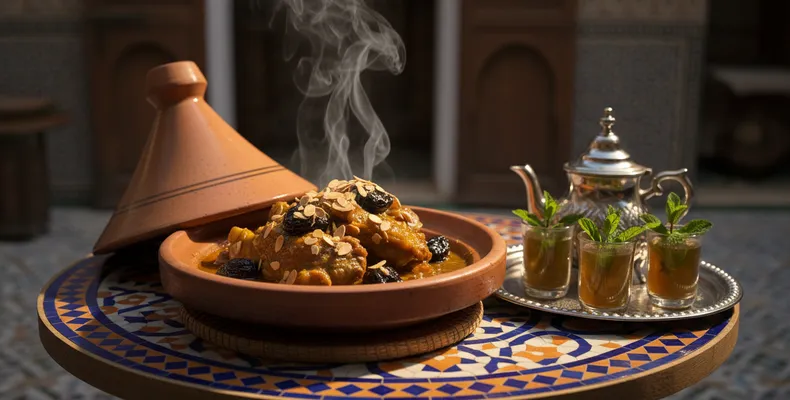
Few dishes represent the soul of Moroccan cooking as well as lamb tagine with prunes and almonds. The name comes precisely from the conical clay pot in which it is prepared, the tagine, whose tall, pointed lid concentrates the steam and returns all the moisture to the stew, leaving the meat incredibly tender and the sauce rich. It is a feast dish, served at weddings, religious celebrations and family gatherings all over Morocco.
The great secret of this tagine is the balance between sweet and savory, a hallmark of North African cooking. The lamb, seasoned with warm spices such as cinnamon, ginger and saffron, cooks slowly until it falls apart, while the prunes dissolve into a glossy, fragrant sauce, often finished with a touch of honey. On top, golden almonds and toasted sesame bring crunch and contrast.
This combination of dried fruit with meat goes back to the Arab-Andalusian and Persian traditions that deeply influenced Maghreb cuisine over the centuries. The spice route brought cinnamon, cloves and saffron, while almond and plum trees spread through the Moroccan oases and valleys. The result is a dish that tells the story of several cultures in every forkful.
The good news is that you do not need an authentic clay pot to make a delicious tagine at home. A heavy pot with a thick bottom or a casserole with a lid works very well. The important thing is patience: slow cooking is what turns simple ingredients into something memorable. Prepare it with care and serve with Moroccan bread or couscous alongside.
Recipe card
- Origin: Morocco
- Region/tradition: Moroccan (Maghreb, North Africa)
- Category: Main course
- Difficulty: Medium
- Prep time: 30 minutes
- Cooking time: 2 hours
- Total time: 2 hours 30 minutes
- Serves: 6
Ingredients
- 1.2 kg lamb shoulder in large pieces
- 2 large onions, chopped
- 3 garlic cloves, crushed
- 3 tablespoons olive oil
- 1 teaspoon ground cinnamon
- 1 teaspoon ground ginger
- 1 teaspoon turmeric
- 1 pinch saffron threads
- 1 teaspoon ground cumin
- Salt to taste
- Black pepper to taste
- 1 cinnamon stick
- 500 ml water or beef stock
- 300 g pitted prunes
- 2 tablespoons honey
- 1 tablespoon lemon juice
- 100 g blanched almonds
- 1 tablespoon sesame seeds (optional)
- Chopped fresh cilantro to finish
Method
- Season the lamb pieces with salt, pepper, ground cinnamon, ginger, turmeric and cumin, mixing well to coat all the meat.
- Heat the olive oil in a heavy pot and sear the lamb pieces over medium-high heat until browned on all sides; set aside.
- In the same pot, sauté the chopped onion until soft and translucent, about 8 minutes.
- Add the garlic and sauté for 1 more minute until fragrant.
- Return the meat to the pot, add the cinnamon stick and the saffron threads.
- Cover with the water or stock, put the lid on and cook over low heat for about 1 hour 30 minutes, stirring occasionally, until the meat is very tender.
- Meanwhile, soak the prunes in warm water for 15 minutes and drain.
- Add the prunes, honey and lemon juice to the stew and cook uncovered for 20 more minutes, until the sauce thickens.
- In a separate skillet, toast the almonds over low heat until lightly golden and set aside.
- Quickly toast the sesame seeds in the same skillet, if using.
- Taste and adjust the salt and honey, seeking the balance between sweet and savory.
- Serve hot, topped with the almonds, sesame and fresh cilantro.
Tips and variations
- Sear the meat well at the start: that browning is what gives depth of flavor to the sauce.
- Always cook over very low heat and with patience; haste makes the lamb tough and the sauce thin.
- If you prefer a lighter version, replace the lamb with chicken thighs and drumsticks, halving the cooking time.
- For an even more Moroccan touch, add a splash of orange blossom water along with the honey.
- The prunes can be swapped for dried apricots or a mix of both, to vary the dish's perfume.
- If the sauce is too thin, remove the meat and let it reduce over high heat for a few minutes before serving.
- Serve with Moroccan couscous, pita bread or khobz-style bread to soak up all the sauce.
- Keep in the fridge in a sealed container for up to 3 days; the flavor is even better the next day. It can also be frozen for up to 2 months.
Approximate nutrition per serving: 520 kcal, 34 g protein, 26 g fat and 30 g carbohydrates, values that vary with the cuts and the amount of honey used. A charming curiosity: in Morocco, the more spices and dried fruit a tagine has, the more generous and welcoming it is considered, which is why the dish is usually reserved for receiving dear visitors. How about making yours and bringing a little piece of the Maghreb to your table?