
Traditional koshari: the Egyptian street dish of rice, lentils, pasta, chickpeas, tomato sauce and crispy onions
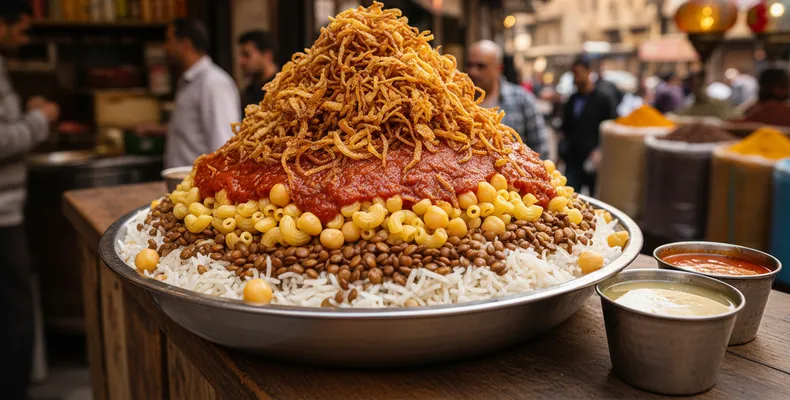
Koshari is modern Egypt on a plate: rice and lentils, a combination that came from India with British soldiers in the 19th century, pasta brought by Italian immigrants, chickpeas from the Levant and tomato sauce, all piled into a bowl and sold for coins in shops dedicated only to it, where the staff assemble the bowls in seconds with metal ladles, in a percussive rhythm.
Each component is simple. What makes koshari is the sum and the sauces: the tomato one, cooked with garlic, cumin, coriander and a little vinegar and chili; the dakka, a sour mix of vinegar, garlic, cumin and lemon poured over; and the shatta, the hot sauce for those who want it. And, over everything, onions fried until brown and crispy, whose oil also seasons the rice.
It is a vegan meal complete in protein, cheap, filling, and proof that street food can be a work of engineering. At home it takes a bit of work, because of the number of pots, but it makes a lot and all the parts can be made in advance.
Recipe card
- Origin: Cairo, Egypt
- Category: Vegan main course, street food
- Difficulty: Medium (many parts, all easy)
- Preparation time: 30 minutes
- Cooking time: 1 hour
- Serves: 6
Ingredients — base
- 1 1/2 cups short- or medium-grain rice
- 1/2 cup vermicelli (broken angel hair pasta)
- 1 cup brown lentils
- 1 1/2 cups short pasta (elbows or small penne)
- 1 can cooked chickpeas (400 g), drained
- 3 large onions, thinly sliced
- Oil for frying
- 2 tablespoons wheat flour
- 1 teaspoon ground cumin
- Salt to taste
Ingredients — sauces
- 800 g chopped peeled tomatoes (or 3 cups blended fresh tomato)
- 2 tablespoons tomato paste
- 5 garlic cloves, chopped
- 2 tablespoons oil
- 1 teaspoon ground cumin
- 1 teaspoon ground coriander
- 1 tablespoon vinegar
- Chili flakes to taste
- For the dakka: 1/4 cup vinegar, 2 crushed garlic cloves, 1 teaspoon cumin, juice of 1 lemon, 1/4 cup water, salt
Method
- Toss the onion slices in the flour and fry in hot oil, in batches, stirring, until golden brown and crispy. Drain on paper towels, salt and reserve the oil.
- Cook the lentils in salted water with the cumin for 20 minutes, until tender but whole. Drain.
- Toast the vermicelli in 2 spoons of the onion oil until golden, add the rice, sauté for 1 minute, add 2 1/4 cups of water and salt and cook covered for 15 minutes.
- Cook the pasta in salted water, drain and toss with a little of the onion oil.
- For the tomato sauce, sauté the garlic in the oil for 1 minute, add the tomato, tomato paste, cumin, coriander, vinegar, chili and salt and cook for 20 minutes, until thick.
- Mix the dakka ingredients in a jar and set aside.
- Heat the chickpeas in a little salted water and drain.
- Assemble each bowl in layers: rice with vermicelli, lentils, pasta, chickpeas, tomato sauce on top and the crispy onions crowning it. Drizzle with dakka at the table and offer hot sauce.
Tips and variations
- The flour on the onions is the Cairo shops' trick for lasting crunch.
- All the parts can be made the day before and reheated; only the onions should be fried on the day.
- Thin tomato sauce ruins the dish: cook until thick.
- A pinch of cinnamon in the tomato sauce is common in Alexandria.
- Assembled leftovers reheated in the microwave are still great.
- Brown lentils hold their shape; red ones fall apart and do not work here.
- Serve with a salad of chopped cucumber and tomato with lemon.
Koshari is the bowl that feeds Cairo for a few coins: carbs on carbs, tangy tomato sauce, garlic and crispy onions. Make it at home and understand the line.