
Traditional doro wat: the Ethiopian chicken stew with berbere, caramelized onion and boiled eggs
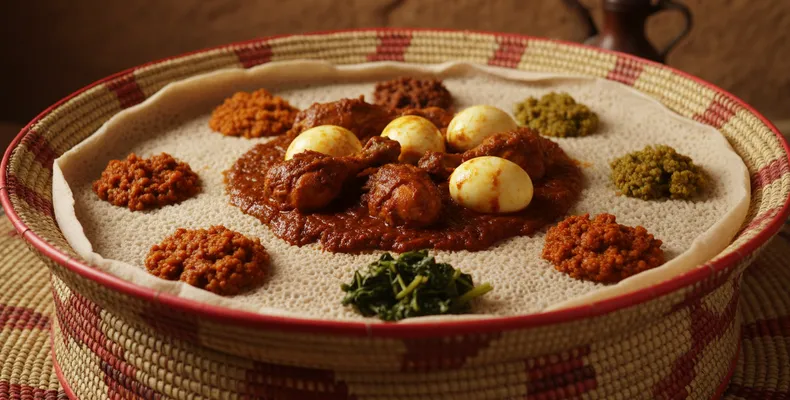
Doro wat is the dish Ethiopia serves at Christmas, at Easter and on every occasion that deserves a chicken. Wat is stew, doro is chicken, and the traditional recipe begins with a quantity of onion that seems excessive: kilos, finely chopped and cooked without oil, on low heat, for an hour, until they melt into a dark, sweet sauce. Only then do the spiced butter and the berbere go in.
Berbere is the soul of Ethiopian cooking: a blend of dried red chili with ginger, garlic, cardamom, fenugreek, coriander, cumin, cinnamon, cloves and more, toasted and ground, red and fiery. Niter kibbeh is clarified butter simmered with spices and herbs, which perfumes everything. With these two, the chicken cooks until it almost falls apart, and the boiled eggs, scored with cuts to absorb the sauce, go in at the end, one per person.
It is served over injera, the spongy, sour pancake-bread made of teff flour, which covers the whole table and serves as plate, cutlery and side dish. You tear off a piece and pick up the chicken with it. Without injera, rice or pita bread play the part, with less charm.
Recipe card
- Origin: Ethiopia
- Category: Main course, chicken stew
- Difficulty: Medium
- Preparation time: 30 minutes (plus 1 hour of marinating)
- Cooking time: 2 hours
- Serves: 6
Ingredients
- 1.5 kg skinless chicken thighs and drumsticks
- Juice of 2 lemons
- 1 kg red onions, very finely chopped
- 1/2 cup niter kibbeh (spiced clarified butter) or clarified butter
- 4 tablespoons berbere (adjust to heat)
- 4 garlic cloves, chopped
- 1 tablespoon grated ginger
- 1 tablespoon tomato paste
- 1/2 teaspoon ground cardamom
- 1/4 cup red wine or tej (optional)
- 2 cups water or chicken stock
- 6 hard-boiled eggs, peeled
- Salt to taste
- Injera to serve
Method
- Wash the chicken with the lemon juice and water, drain, season with salt and let rest for 1 hour.
- In a large dry pot, cook the onion on low heat, stirring often, for 40 to 50 minutes, until it wilts, darkens and becomes almost a purée. Add a little water if it starts to stick.
- Add the niter kibbeh and sauté for 10 minutes.
- Add the berbere, garlic, ginger and tomato paste and cook for 10 minutes, stirring, until the sauce is dark and glossy.
- Add the wine and water, mix and add the chicken, covering it with the sauce.
- Cover and cook on low for 45 minutes to 1 hour, turning the pieces occasionally, until the chicken is very tender and the sauce thick.
- Make shallow cuts in the boiled eggs and place them in the sauce, cooking for another 10 minutes so they absorb color and flavor.
- Add the cardamom, adjust the salt and serve over injera, one egg per person.
Tips and variations
- The onion cooked without fat for almost an hour is the step you do not rush: it is what gives the sauce body and sweetness.
- Homemade niter kibbeh: melt 250 g butter with onion, garlic, ginger, cardamom, fenugreek and oregano on low for 30 minutes and strain.
- Berbere can be bought ready-made in African grocery stores or online; the quantity sets the heat.
- Free-range chicken is traditional and needs more cooking time.
- It is better the next day; freezes well.
- Serve alongside misir wat (red lentils in berbere) and gomen (sautéed collard greens) for a complete Ethiopian table.
- Real injera is made from teff flour fermented for days; ready mixes and frozen injera exist in specialty stores.
Doro wat is dark, fiery, fragrant with spiced butter and made to be shared from a single table, by hand. It is the heart of the Ethiopian table.