
Traditional Haitian griot: the pork cubes marinated in epis, simmered and fried until golden, with pikliz
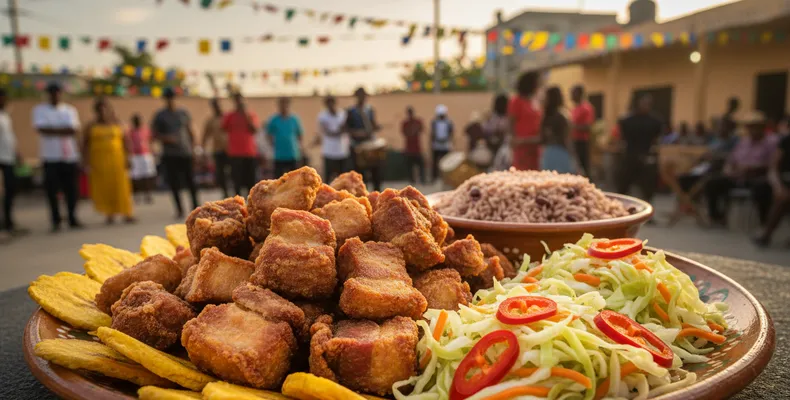
Griot is the dish that appears at every birthday, wedding and special Sunday in Haiti, and the one Haitians of the diaspora seek out most in the restaurants of Miami, Montreal and New York. Pork, a symbol of prosperity in the country's history, is cut into large cubes, marinated for hours and cooked twice: first in the pot, until tender, then in hot fat, until it gets a golden, crisp crust.
The marinade is epis, the base of all Haitian cooking: a blended paste of parsley, scallions, garlic, bell pepper, thyme, cloves and oil, with sour orange juice or lime with orange, which tenderizes and perfumes the meat. The slow cooking in its own marinade also yields a sauce, the sòs, served on the side.
The inseparable side is pikliz, cabbage with carrot and onion pickled in vinegar with scotch bonnet chile, fiery and tangy, which cuts the fat of the pork. Fried and smashed green plantain, the bannann peze, and rice and beans complete the plate.
Recipe card
- Origin: Haiti
- Category: Main course, simmered and fried pork
- Difficulty: Medium
- Prep time: 30 minutes (plus 4 to 12 hours of marinating)
- Cooking time: 1 hour 30 minutes
- Serves: 6
Ingredients — pork and epis
- 1.5 kg pork shoulder or leg with some fat, in 4 cm cubes
- 1 bunch parsley
- 6 scallions
- 6 garlic cloves
- 1 green bell pepper
- 1 small onion
- 4 sprigs fresh thyme
- 3 cloves
- 1 scotch bonnet or habanero chile (optional, whole)
- 1/4 cup oil
- Juice of 2 oranges and 2 limes (imitating sour orange)
- 1 tablespoon salt
- 1 teaspoon black pepper
- Oil for frying
Ingredients — pikliz and sides
- 1/2 cabbage, thinly shredded
- 1 carrot, grated
- 1/2 onion, thinly sliced
- 2 scotch bonnet or habanero chiles, sliced
- 1 cup white vinegar
- Juice of 1 lime
- 1 teaspoon salt
- 4 black peppercorns and 2 cloves
- Green plantains for frying
- Rice and beans to serve
Method
- Make the pikliz the day before: mix the cabbage, carrot, onion and chile in a jar, add the vinegar, lime, salt, peppercorns and cloves, press down and seal. Keep in the fridge for at least 12 hours.
- Blend the parsley, scallions, garlic, bell pepper, onion, thyme, cloves and oil into a paste: the epis.
- Wash the pork cubes with the lime juice and water and pat dry. Mix with the epis, the orange and lime juice, salt and black pepper, cover and refrigerate for 4 to 12 hours.
- Put the pork with its marinade in a pot, add the whole chile and 1 cup of water, cover and cook over medium-low heat for 1 hour, until the meat is tender and the liquid has reduced.
- Remove the cubes and drain well. Reserve the sauce left in the pot, without the chile.
- Heat 3 fingers of oil in a deep skillet and fry the pork in batches over high heat for 4 to 5 minutes, turning, until browned and crisp outside.
- Fry the green plantains in thick slices for 3 minutes, smash each one with the bottom of a glass and fry again until golden. Salt them.
- Serve the griot with the pikliz, the plantains, rice and beans and the reserved sauce on the side.
Tips and variations
- Washing the meat with lime is a Haitian custom and removes the strong smell of pork; do not skip it if you want the authentic flavor.
- The pork must be very dry before frying: wet, it spatters and does not brown.
- In a very hot oven with the broiler, 15 minutes turning, is an alternative to frying.
- Tassot is the same dish with beef or goat.
- Epis can be made in double quantity and kept in the fridge for 2 weeks or frozen in cubes.
- Pikliz keeps for weeks in the fridge and gets hotter and hotter.
- Serve with a cold Prestige beer or a passion fruit juice.
Griot is pork tender inside, crisp outside and perfumed with epis, with fiery pikliz to balance it. It is Haiti's celebration on a plate, and worth every hour of marinating.