
Traditional Indonesian Nasi Goreng: Fried Rice with Kecap Manis and Crispy Egg
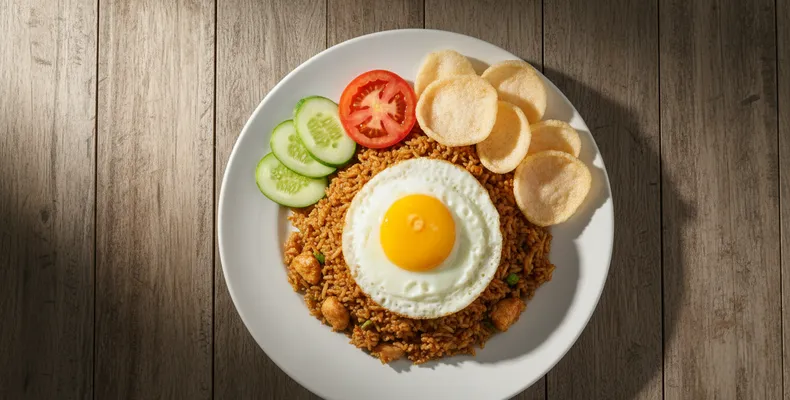
If there's one dish that captures the soul of Indonesian cuisine in a single pan, it's nasi goreng. Literally translated as fried rice, it's much more than reheated leftovers: it's an addictive combination of rice stir-fried over high heat, the unmistakable kecap manis (sweet soy sauce), shrimp or chicken, and, crowning it all, a fried egg with crispy edges and a runny yolk. It's street food, breakfast, and family dinner all at once.
Nasi goreng is considered by many to be Indonesia's national dish. Every region, every family, and every street vendor has their own version, but the heart of the recipe is always the same: cooked and cooled rice stir-fried in a very hot wok with garlic paste, onion, chili, and kecap manis, which gives it a dark color, shine, and that striking sweet-savory flavor. It's commonly served with cucumber, tomato, krupuk (shrimp crackers), and an egg on top.
The big secret lies in the rice. It should be cold and dry, ideally made the day before and stored in the refrigerator. Freshly cooked rice releases too much moisture and turns into a sticky mush in the pan. That's exactly why nasi goreng was born as a clever way to make use of leftover rice from the previous day. In this article you'll find the complete traditional recipe, with all the tips to get the rice just right, master the secret of kecap manis, and fry that crispy egg that makes all the difference. It's an affordable dish, made in minutes, and perfect for using up day-old rice.
Recipe Details
- Origin: Indonesia (Southeast Asia)
- Category: main dish
- Time: 30 minutes (plus cooling the rice)
- Yield: 4 servings
- Difficulty: easy to medium
- Calories: approximately 420 to 480 per serving, depending on the protein and amount of oil
Ingredients — fried rice
- 4 cups cooked, cold white rice (preferably from the day before)
- 3 tablespoons vegetable oil
- 200 g (about 7 oz) cleaned shrimp or diced chicken breast
- 4 cloves garlic, minced
- 3 shallots or 1 small onion, chopped
- 1 to 2 red chilies, chopped (to taste)
- 3 tablespoons kecap manis
- 1 tablespoon regular soy sauce
- 1 teaspoon shrimp paste (terasi), optional
- Salt and pepper to taste
- 2 stalks green onion, chopped, to finish
Ingredients — to serve
- 4 eggs
- Cucumber slices
- Tomato slices
- Shrimp crackers (krupuk)
- Crispy fried onions on top, if desired
Instructions
- Set aside the cold rice and loosen the grains with a fork so they don't clump together.
- If using terasi shrimp paste, crumble it.
- Have all the chopped ingredients prepped and within reach, since nasi goreng cooks over high heat and moves fast (mise en place).
- Heat 2 tablespoons of oil in a wok or large skillet over high heat.
- Sauté the garlic, shallots, and chili until fragrant, about 1 minute.
- Add the shrimp or chicken and the shrimp paste, if using, and stir-fry until golden.
- Add the cold rice and stir vigorously, spreading the grains across the hot surface so they fry rather than steam.
- Drizzle with the kecap manis and soy sauce, mixing well so the dark color spreads throughout the rice.
- Taste and adjust the salt and pepper.
- Let the rice fry for another minute or two without stirring constantly, to develop those lightly toasted spots.
- Finish with the green onion and keep warm.
- For the crispy egg, heat the remaining tablespoon of oil in a small skillet until almost smoking.
- Crack the egg in carefully and let it fry without stirring: the edges should bubble up and turn lacy and crispy, while the yolk stays runny.
- Assemble each plate with a portion of rice, the egg on top, and the cucumber, tomato, and crackers on the side.
Tips and Variations
- Use very high heat from start to finish to achieve that lightly smoky wok flavor.
- Don't overcrowd the pan: if you're cooking for a crowd, do it in two or three batches.
- Don't skip cooling the rice, as it's what guarantees loose, separate grains.
- Kecap manis can be replaced with a homemade mixture: regular soy sauce reduced with brown sugar until thick and glossy.
- The shrimp paste can be left out without any problem, but the small amount used greatly deepens the flavor.
- For vegetarian versions, swap the shrimp for firm tofu and mushrooms, and use soy sauce instead of terasi.
- Nasi goreng keeps well in the refrigerator for up to two days in a sealed container; just reheat in a hot skillet with a drizzle of oil.
- The egg is always made right before serving.
- The sides (cucumber, tomato, krupuk) are traditional and balance the intensity of the rice.
The history of nasi goreng is intertwined with the trade routes that passed through the Indonesian archipelago. The technique of stir-frying cold rice likely arrived with Chinese influences centuries ago, but it was in Indonesia that it gained the kecap manis and local seasonings that made it unique. It became popular as a practical solution against waste, since in hot climates rice needed to be used up quickly. Today it's served at street stalls, luxury hotels, and home tables throughout the country, a symbol that the best food often comes from creativity with what you already have at home. Make it at home and bring the flavor of Indonesia into your kitchen.