
Traditional oyakodon: the Japanese chicken and egg rice bowl in dashi and soy sauce
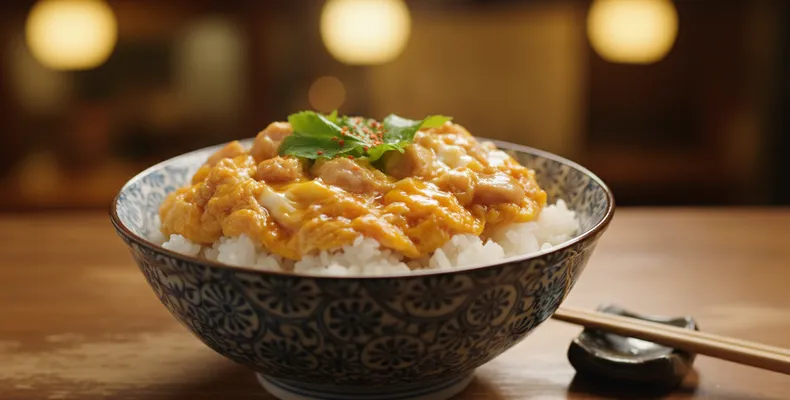
Oyakodon means parent-and-child bowl, an affectionate pun: the chicken is the parent, the egg is the child, and the two go together over rice. The dish was born in Tokyo at the end of the 19th century, at Tamahide, a restaurant specializing in chicken, and became one of the country's most common donburi, served at every train-station counter and made in every home with whatever is in the fridge.
The base is the dashi sauce, the Japanese stock of kombu seaweed and dried fish, with soy sauce, mirin and a little sugar. The chicken cooks in it with sliced onion, and the eggs, only lightly beaten, are poured over and cooked until half set, half creamy, the point the Japanese call hanjuku.
It is a one-serving-at-a-time dish, made in a small pan, which is why the recipe yields two bowls: repeat the process for the second. Twenty minutes, simple ingredients and a bowl that comforts like few others.
Recipe card
- Origin: Tokyo, Japan
- Category: Main course, donburi (rice bowl)
- Difficulty: Easy
- Preparation time: 10 minutes
- Cooking time: 15 minutes
- Serves: 2
Ingredients
- 300 g boneless chicken thigh, in 2 cm pieces
- 4 eggs
- 1 medium onion, thinly sliced
- 200 ml dashi (Japanese stock; 1 teaspoon dashi powder in 200 ml water)
- 3 tablespoons soy sauce
- 2 tablespoons mirin
- 1 tablespoon sake (optional)
- 1 teaspoon sugar
- 2 bowls of cooked Japanese rice, very hot
- Thinly sliced scallion or mitsuba to finish
- Shichimi togarashi (Japanese pepper) to taste
Method
- Mix the dashi, soy sauce, mirin, sake and sugar and divide into two parts.
- Lightly beat 2 eggs with chopsticks, just enough to break the yolks, without blending.
- In a small pan (about 20 cm), put half the sauce and half the onion and bring to a boil over medium heat.
- Add half the chicken, spread it out and cook for 5 minutes, turning once, until cooked through.
- Pour the beaten eggs in a circle over the chicken, cover and cook for 1 minute on medium-low.
- When the edges are set and the center still creamy, turn off the heat.
- Slide everything, with the sauce, over a bowl of hot rice.
- Finish with scallion and shichimi, and repeat for the second serving.
Tips and variations
- The egg must not overcook: take it off the heat while it still looks raw in the center; the heat of the rice finishes the cooking.
- Save a little beaten egg to pour in the last 15 seconds, and the surface turns silky.
- Without dashi, use light chicken stock with a pinch of sugar.
- Katsudon uses the same technique over a tonkatsu (breaded pork cutlet) instead of chicken.
- Chicken breast works, but thigh is juicier.
- An oyakodon pan is small on purpose: in a big pan the egg spreads and dries out.
- Short-grain Japanese rice makes a difference; well-cooked regular rice will do.
Oyakodon is the Japanese quick lunch in its most honest form: one bowl, five ingredients and an egg at just the right point. Make it once and it will join the routine.