
Traditional bibimbap: the Korean rice bowl with seasoned vegetables, beef, egg and gochujang
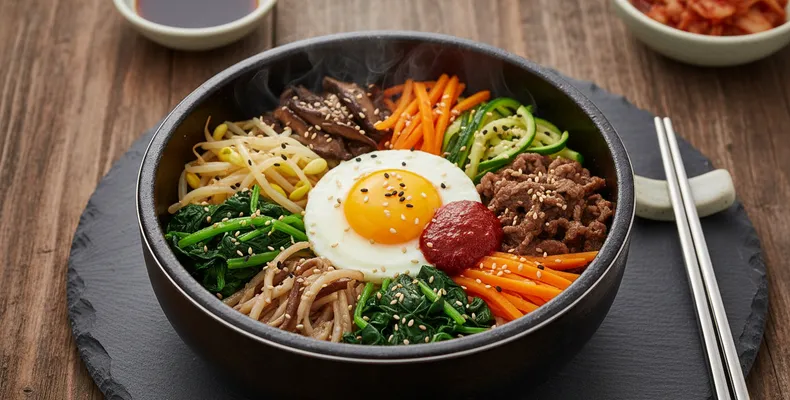
Bibimbap means mixed rice, and the beauty of the dish lies in being served separated, each vegetable in its place, colorful as a wheel, to be mixed with the spoon only when it is time to eat. It appears in Korean texts from the 16th century, and popular legend says it was born on New Year's Eve, when all the leftovers had to be eaten before the year turned.
The city of Jeonju is the dish's capital, with a version of rice cooked in beef broth and more than twenty toppings. At home, five namul are enough: spinach, bean sprouts, carrot, zucchini and mushroom, each sautéed or blanched and seasoned separately with sesame oil, garlic and salt. It is chopping work, not technique.
The meat is beef in thin strips marinated in soy sauce and sesame, the egg is fried with a runny yolk, and the sauce is gochujang, the fermented chili paste, with sesame and a touch of sugar. In the dolsot version, the hot stone bowl turns the rice at the bottom into a crispy crust.
Recipe card
- Origin: South Korea
- Category: Main course, rice bowl
- Difficulty: Medium (laborious, not difficult)
- Preparation time: 45 minutes
- Cooking time: 30 minutes
- Serves: 4
Ingredients — beef and sauce
- 300 g beef (sirloin or rump) in very thin strips
- 2 tablespoons soy sauce
- 1 tablespoon sugar
- 1 tablespoon sesame oil
- 2 garlic cloves, chopped
- 4 tablespoons gochujang
- 1 tablespoon sesame oil (for the sauce)
- 1 tablespoon sugar (for the sauce)
- 1 tablespoon water
- 1 teaspoon rice vinegar
- 1 teaspoon toasted sesame seeds
Ingredients — namul (vegetables)
- 300 g spinach
- 300 g bean sprouts
- 2 carrots in thin matchsticks
- 2 zucchini in thin half-moons
- 200 g fresh shiitake mushrooms, sliced
- 3 garlic cloves, chopped (divided among the vegetables)
- Sesame oil, neutral oil, salt and toasted sesame seeds for seasoning
Ingredients — assembly
- 4 bowls of cooked short-grain rice, hot
- 4 eggs
- Toasted sesame seeds and scallion to finish
Method
- Marinate the beef with the soy sauce, sugar, sesame oil and garlic for 20 minutes.
- Mix the gochujang sauce ingredients and set aside.
- Blanch the spinach for 30 seconds, squeeze well, chop and season with 1 teaspoon sesame oil, a little garlic, salt and sesame.
- Cook the bean sprouts in boiling water for 3 minutes, drain and season the same way.
- Sauté the carrot in a drizzle of neutral oil with salt for 2 minutes, just until softened. Set aside.
- Sauté the zucchini with salt and a little garlic for 3 minutes. Set aside.
- Sauté the mushrooms with a splash of soy sauce for 4 minutes. Set aside.
- In a very hot pan, stir-fry the marinated beef for 3 minutes, until browned.
- Fry the eggs with runny yolks.
- Assemble each bowl: rice at the bottom, the five vegetables and the beef arranged in wedges around, the egg in the center and a spoonful of sauce. Sprinkle sesame and scallion and mix everything at the table before eating.
Tips and variations
- Dolsot bibimbap: grease a stone or cast-iron bowl with sesame oil, heat on the stove, add the rice and leave 5 minutes to form a crust before assembling.
- Vegetarian version: no beef, with more mushrooms or grilled tofu.
- The namul can be prepared the day before and kept in the fridge; only the beef and egg are made fresh.
- Bracken fern (gosari) and pickled radish are classic Jeonju toppings.
- Adjust the sauce: more gochujang for heat, more sugar and vinegar to soften.
- A raw egg instead of fried is common in Korea, cooked by the heat of the stone bowl.
- Serve with kimchi and a light miso or seaweed soup.
Bibimbap is the dish that gathers the whole garden into one bowl and lets everyone mix it their own way. Laborious to assemble, and rewarding from the first spoonful.