
Traditional Lebanese hummus: the creamy chickpea dip with tahini, lemon and olive oil
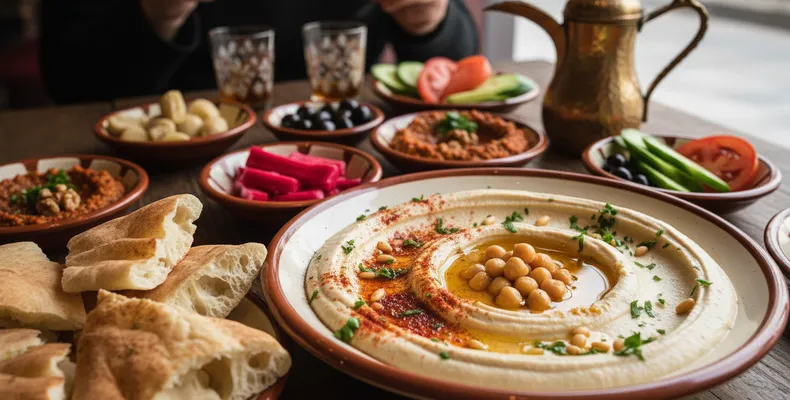
Hummus is the Arabic word for chickpea, and the full dish is called hummus bi tahina: chickpeas with tahini. It is the center of every mezze table in the Levant, from Lebanon to Palestine, complete with passionate disputes over who makes it best. The recipe appears in Arabic cookbooks from the 13th century, and since then it has changed little: chickpeas, tahini, lemon, garlic and salt.
What separates Lebanese restaurant hummus from supermarket dip is technique. The chickpeas are cooked far past done, with baking soda, until they crumble between the fingers. The tahini is blended first with the lemon and garlic, until it becomes a pale cream, before the chickpeas go in. And ice-cold water, or ice, goes into the processor in a stream, leaving the paste light and white instead of heavy and beige.
It is served on a shallow plate, spread with the back of a spoon to form a groove, with good olive oil in the middle, paprika or sumac, a few whole chickpeas and warm pita bread. It is the starter of any Lebanese meal and a whole lunch when it comes with falafel and salad.
Recipe card
- Origin: Lebanon and the Levant
- Category: Mezze, chickpea dip
- Difficulty: Easy
- Preparation time: 20 minutes (plus overnight soaking)
- Cooking time: 1 hour 30 minutes
- Serves: 6
Ingredients
- 250 g dried chickpeas, soaked in water overnight
- 1 teaspoon baking soda
- 150 g good-quality tahini (sesame paste)
- Juice of 1 1/2 large lemons (about 5 tablespoons)
- 2 small garlic cloves
- 1 teaspoon salt
- 1/2 teaspoon ground cumin (optional)
- 4 to 6 ice cubes or 1/2 cup ice-cold water
- Extra-virgin olive oil to serve
- Paprika or sumac, chopped parsley and toasted pine nuts to finish
- Warm pita bread
Method
- Drain the chickpeas, put them in a pot with the baking soda and plenty of cold water and cook on medium for 1 to 1 1/2 hours, skimming off the foam and any skins that rise, until the chickpeas crumble when pressed.
- Set aside a handful of whole chickpeas for garnish and drain the rest, keeping a little of the water.
- In the food processor, blend the tahini with the lemon juice, garlic and salt for 1 minute, until it becomes a pale, thick cream.
- Add the still-warm chickpeas and the cumin and blend for 2 minutes.
- With the processor running, add the ice cubes one by one (or the ice-cold water in a stream) and blend for another 3 to 4 minutes, until the paste is smooth, pale and silky. If needed, add a little of the cooking water.
- Taste and adjust the salt and lemon.
- Spread on a shallow plate, make a groove with the back of the spoon, drizzle with olive oil, sprinkle paprika, the whole chickpeas, parsley and pine nuts.
- Serve warm or at room temperature with pita bread.
Tips and variations
- Canned chickpeas work: heat them with a pinch of baking soda for 15 minutes until softer and follow the recipe.
- Bad tahini ruins hummus: choose a runny, pale paste with no bitterness.
- Blending longer than seems necessary is the secret to restaurant texture.
- Hummus with meat: top with ground lamb sautéed with pine nuts and cinnamon.
- Msabbaha is the version with whole chickpeas and tahini sauce on top.
- Keeps 4 days in the fridge; let it come back to room temperature and drizzle with fresh olive oil before serving.
- A handful of ice instead of water is the Beirut kitchen trick for the pale color.
Well-made hummus needs nothing more than warm bread and olive oil. Make it with well-cooked chickpeas and patience at the processor, and you will never buy it ready-made again.