
Traditional romazava: the Malagasy beef broth with brèdes mafana, the leaf that tingles in the mouth
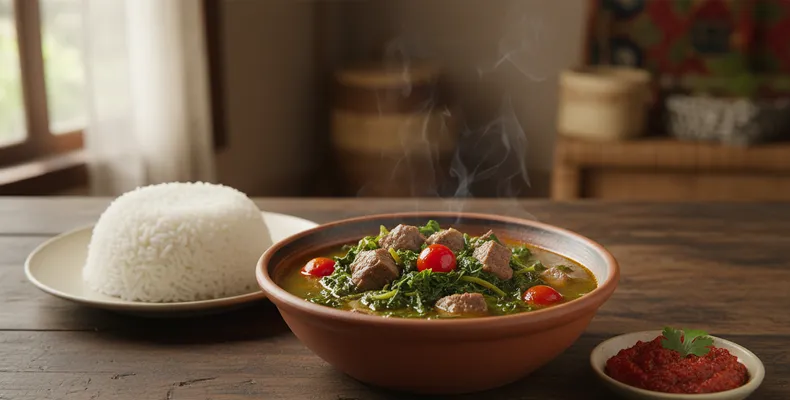
Madagascar eats more rice per person than almost any country in the world, and romazava is what goes on top. It was one of the dishes of the court of the Merina kingdom in the 19th century, and it remains the everyday stew of the highlands: cubes of zebu, the island's humped cattle, cooked in a light broth with tomato, onion, garlic and ginger, and a generous handful of brèdes, the greens that give the dish its name and character.
The main brède is mafana, the leaf and flower of the toothache plant, the same plant used in the Brazilian tacacá, which causes the tingling and slight numbness in the mouth. Along with it go other leaves, such as watercress, spinach, mustard or pumpkin leaves, whatever the garden has. The broth is clear and fat-free, and the flavor comes from the cooking time and the leaves.
It is served in a bowl next to a mountain of white rice, to pour over, and with sakay, the chili paste with ginger and garlic, on the side. Fresh toothache plant is found in markets in northern Brazil and in Asian stores (it is the same one used in Vietnamese cooking); without it, romazava is still good, just without the tingle.
Recipe card
- Origin: Highlands of Madagascar
- Category: Main course, beef broth with greens
- Difficulty: Easy
- Preparation time: 25 minutes
- Cooking time: 1 hour 30 minutes
- Serves: 6
Ingredients
- 800 g beef (shank or chuck) in 3 cm cubes
- 2 tablespoons oil
- 2 onions, chopped
- 4 garlic cloves, chopped
- 1 piece of ginger, 3 cm, grated
- 4 ripe tomatoes, chopped
- 1 bunch toothache plant (brèdes mafana), leaves and flowers, coarsely chopped
- 1 bunch watercress or spinach, coarsely chopped
- 1 bunch mustard greens or collards in strips (optional)
- 1.2 liters water
- Salt and black pepper to taste
- For the sakay: 4 fresh red chilies, 2 garlic cloves, 2 cm ginger, 1 tablespoon oil and salt, blended
- Cooked white rice, in quantity
Method
- Heat the oil in a pot and brown the beef for 8 minutes.
- Add the onion, garlic and ginger and sauté for 5 minutes.
- Add the tomato, salt and pepper and cook for 5 minutes, until it breaks down.
- Pour in the water, boil, lower the heat and cook covered for 1 hour, until the beef is tender.
- Add the toothache plant, watercress and other leaves and cook for 10 to 15 minutes, until they wilt and the broth takes on their flavor.
- Adjust the salt and serve in bowls with white rice on the side and sakay for those who want it.
Tips and variations
- The toothache plant flowers, the little yellow buds, are the part that tingles most: include a few.
- Chicken or pork romazava follows the same recipe, with less cooking time.
- In the highlands, small dried shrimp are also added to the broth.
- The broth is deliberately thin and clear: the rice absorbs it.
- Leftovers reheat well; the greens darken, but the flavor improves.
- Without toothache plant, a handful of arugula and a pinch of Sichuan pepper vaguely imitate the sensation.
- Sakay keeps 2 weeks in the fridge and goes well with everything.
Romazava is clear broth, tender beef, bitter greens and the surprise of the toothache plant on the tongue, over plenty of rice. It is the taste of home in Madagascar, and a one-pot recipe for any weeknight dinner.