
Traditional nasi lemak: Malaysian coconut rice with sambal, fried anchovies, peanuts, egg and cucumber
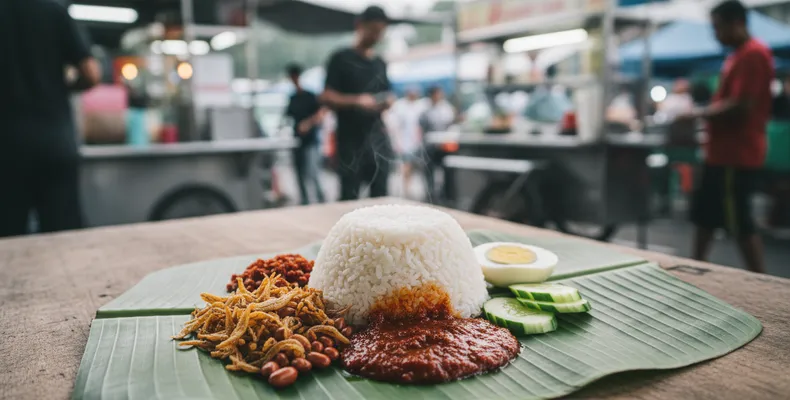
Nasi lemak means fatty rice, or rich rice, and it is the breakfast that unites all of Malaysia: Malays, Chinese and Indians all start the day with a little banana-leaf packet full of coconut rice and sambal bought on the corner. It was peasant food, a nourishing rice with whatever was at hand, and it became national pride served from street stalls to hotels.
The base is rice cooked in coconut milk with pandan leaf, ginger and a little salt, fragrant and slightly sweet. Around it go the classic accompaniments: sambal tumis, a paste of chili, onion, dried shrimp and tamarind cooked in oil until dark and sweet; ikan bilis, dried anchovies fried until crispy; fried peanuts; boiled egg and cucumber slices.
Each part is simple. The work is making all of them, and it is worth it: the contrast of creamy rice with fiery sambal, the crunch of the anchovy and the freshness of the cucumber is what makes the dish. Fried chicken or chicken curry turn breakfast into lunch.
Recipe card
- Origin: Malaysia
- Category: Rice with accompaniments, breakfast or main course
- Difficulty: Medium
- Preparation time: 30 minutes
- Cooking time: 45 minutes
- Serves: 4
Ingredients — coconut rice
- 2 cups jasmine or long-grain rice, rinsed
- 1 1/2 cups coconut milk
- 1 1/2 cups water
- 2 pandan leaves tied in a knot (optional)
- 3 slices of ginger
- 1 teaspoon salt
Ingredients — sambal
- 10 dried red chilies, soaked in hot water and seeded
- 2 fresh red chilies
- 1 large onion
- 3 garlic cloves
- 1 tablespoon soaked dried shrimp (or 1 teaspoon belacan shrimp paste)
- 1/3 cup oil
- 2 tablespoons tamarind pulp diluted in 1/2 cup water
- 2 tablespoons sugar
- Salt to taste
Ingredients — accompaniments
- 1 cup dried anchovies (ikan bilis), rinsed and dried
- 1/2 cup raw peanuts with skin
- Oil for frying
- 4 hard-boiled eggs, halved
- 1 cucumber, sliced
- Banana leaves to serve (optional)
Method
- Put the rice, coconut milk, water, pandan, ginger and salt in the rice cooker or an ordinary pot and cook like regular rice, covered on low, for 15 to 18 minutes. Let rest 10 minutes and fluff with a fork.
- Blend the dried and fresh chilies, onion, garlic and dried shrimp into a paste.
- Heat the oil in a frying pan and fry the paste on medium-low, stirring, for 15 to 20 minutes, until it darkens, dries and the oil separates.
- Add the tamarind water, sugar and salt and cook for another 10 minutes, until the sambal is thick, glossy and sweet-and-sour. Set aside.
- Fry the anchovies in hot oil for 2 minutes, until golden and crispy. Drain.
- Fry the peanuts in the same oil on medium for 3 minutes. Drain.
- Assemble each plate or banana leaf: a mound of rice, a spoonful of sambal, the anchovies and peanuts, half an egg and cucumber slices.
Tips and variations
- Without pandan, the rice is still good; a bay leaf is no substitute, just omit it.
- The sambal can be made in double quantity and kept in the fridge for 2 weeks: it is the soul of the dish.
- Add half the fried anchovies to the sambal in the last minutes for the sambal ikan bilis version.
- Fried chicken with turmeric and curry (ayam goreng) turns it into a complete lunch.
- A fried egg with a runny yolk instead of the boiled one is the stall version.
- Packaged roasted peanuts will do, if unsalted.
- Rice that turned mushy: too much coconut milk; next time use less milk and more water.
Nasi lemak is the breakfast Malaysia eats standing up, wrapped in a leaf, before work. At home, it is a weekend lunch worth every dirty pan.