
Traditional maafe: the Malian meat stew in peanut sauce with vegetables, tomato and chili
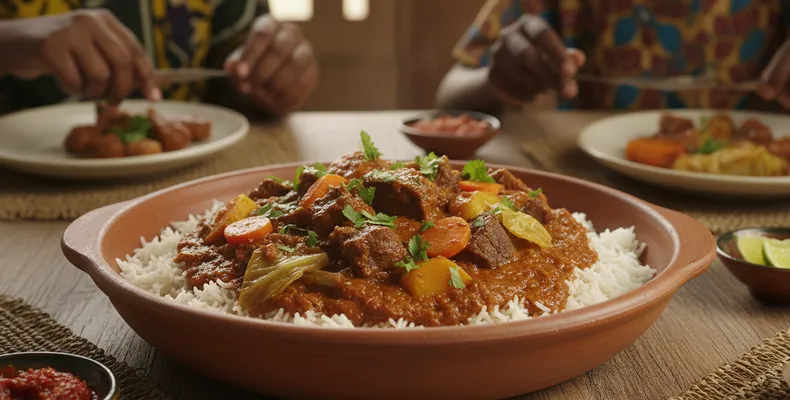
Maafe, mafé, tigadèguèna: the peanut stew has many names and one home, the Sahel, from Mali to Senegal and Guinea. The peanut, arrived from the Americas in the 16th century, found the perfect climate in Mali's dry lands and became the base of the country's cooking, and maafe the everyday dish, the Sunday dish and the one taken on journeys.
The base is natural peanut paste dissolved in the meat broth and cooked for a long time with tomato, onion, garlic and chili, until the peanut oil separates and the sauce turns thick and brick-colored. The vegetables, carrot, sweet potato, cabbage, okra, eggplant, cassava, go in according to the season and the house's taste. It is a patient dish: the longer it cooks, the better.
It is served over white rice or with tô, the millet or corn mash, and a whole chili for those who want it. Outside Mali, it is the dish West Africans recognize most and the one that most wins over anyone tasting it for the first time.
Recipe card
- Origin: Mali and the Sahel
- Category: Main course, peanut stew
- Difficulty: Easy
- Preparation time: 25 minutes
- Cooking time: 1 hour 30 minutes
- Serves: 6
Ingredients
- 800 g lamb or beef (shoulder, chuck) in 3 cm cubes
- 3 tablespoons oil
- 2 large onions, chopped
- 4 garlic cloves, chopped
- 3 tablespoons tomato paste
- 3 ripe tomatoes, chopped
- 1 cup natural peanut paste (peanuts only)
- 1.2 liters water or stock
- 1 whole habanero or fresh red chili
- 2 carrots in large pieces
- 1 sweet potato in large pieces
- 1/4 cabbage in 2 pieces
- 8 whole okra
- 1 small eggplant, quartered (optional)
- 2 bay leaves
- 1 bouillon cube or salt to taste
- Black pepper to taste
- White rice to serve
Method
- Heat the oil in a large pot and brown the meat in batches. Set aside.
- In the same pot, sauté the onion for 8 minutes and the garlic for 1 minute.
- Add the tomato paste and fry for 3 minutes, stirring, until it darkens. Add the tomatoes and cook for 5 minutes.
- Return the meat, add the bay leaves, bouillon, whole chili and water. Boil and cook covered on low for 40 minutes.
- Dissolve the peanut paste in 1 cup of the hot broth from the pot, stirring until creamy, and pour it back in.
- Add the carrot, sweet potato and cabbage and cook for 20 minutes, stirring occasionally so the peanut does not stick to the bottom.
- Add the okra and eggplant and cook for another 15 minutes, until the vegetables are tender and the sauce thick with the oil on the surface.
- Remove the chili and bay leaves, adjust the salt and black pepper and serve over white rice.
Tips and variations
- Pure peanut paste, with no sugar or salt, is mandatory; the sandwich kind sweetens the dish.
- Stir the bottom often after the peanut goes in: it sticks and burns easily.
- Chicken maafe cooks in half the time.
- A vegetarian version with only the vegetables and a little more peanut is common and excellent.
- The whole chili gives fragrance without heat; mashed on the plate, full heat.
- It is better the next day and freezes for 3 months.
- A little smoked fish or dried shrimp in the sauce is the coastal touch.
Maafe is the embrace of the Sahel: peanut, tomato, tender meat and vegetables in a thick sauce over rice. Make a big pot and serve whoever comes.