
Traditional Northeastern Baião de Dois: The Complete Recipe
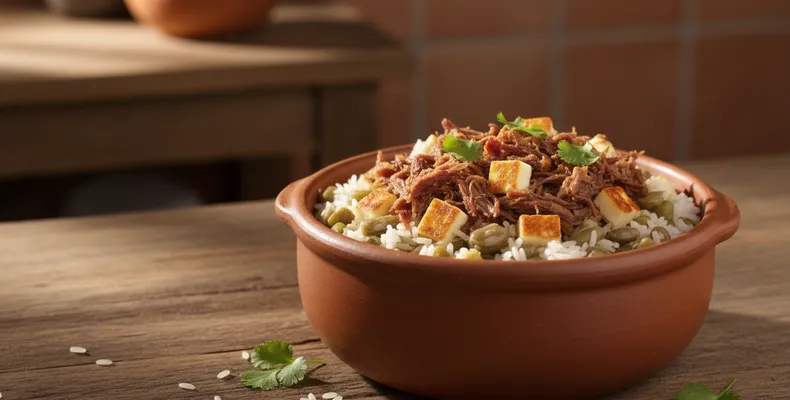
Few dishes capture the soul of Northeastern Brazilian cuisine as well as baião de dois. It was born from the simplicity and creativity of the sertanejo (people of the arid backlands), who learned to turn affordable ingredients into a hearty, comforting meal full of character. If you want to bring that taste of a Northeastern grandmother's kitchen into your own home, you've come to the right place.
In this article, we'll walk through the entire traditional baião de dois recipe, made with rice, green cowpeas, queijo coalho (a firm grilling cheese) and dried beef. Along with the detailed step-by-step, you'll find tips, substitutions, storage methods, and even a bit of the history behind this beloved dish. Get your pot and your appetite ready.
Recipe card
- Origin: Northeastern Brazil (especially Ceará and the surrounding region)
- Region/tradition: Brazilian, sertanejo
- Category: Main dish
- Difficulty: Medium
- Preparation time: 1h30 (plus the time to desalt the dried beef)
- Yield: 6 servings
Ingredients
- 2 cups of rice, rinsed and drained
- 2 cups of green cowpeas (fresh cowpeas, also known as feijão-macassar)
- 500 grams of dried beef, desalted and shredded
- 300 grams of queijo coalho (firm grilling cheese), cut into cubes
- 1 large onion, chopped
- 4 garlic cloves, crushed
- 1 small bell pepper, chopped
- 2 tomatoes, chopped
- Chopped scallions and parsley (cheiro-verde) to taste
- Fresh cilantro to taste
- 2 tablespoons of manteiga de garrafa (Brazilian clarified butter, or oil)
- Salt and pepper to taste
If possible, keep enough water on hand to cook the beans and rice, along with a large, wide-bottomed pot, which helps distribute the heat evenly and blend the flavors. The manteiga de garrafa (bottled clarified butter) is the secret to the authentic flavor, so it's worth looking for it at markets that sell Northeastern Brazilian products.
Instructions
- Desalt the dried beef by soaking it in water for at least 12 hours, changing the water three to four times.
- Cook the beef in fresh water until tender, drain, let it cool slightly, and shred it or cut it into small cubes.
- Cook the green cowpeas in water until al dente, tender but still firm. Set aside the beans along with some of the cooking water.
- In a large pot, heat the manteiga de garrafa and sauté the onion and garlic until golden and fragrant.
- Add the shredded dried beef and let it fry a bit so it develops a toasted flavor.
- Stir in the bell pepper and tomato, mixing well, and let it cook until it forms an aromatic base.
- Add the rice and sauté for a few minutes, mixing it with the base so the grains absorb the seasoning.
- Add the cooked green cowpeas and the reserved water, adjusting so the liquid covers the rice.
- Cover the pot and let it cook over low heat until the rice is tender and the water has evaporated. Taste and adjust the salt carefully, remembering that the beef already brings its own.
- When the rice is nearly done, add the queijo coalho cubes and the scallions and parsley. Mix gently.
- Cover and let it rest for a few minutes with the heat off, allowing the residual heat to slightly melt the outside of the cheese.
- Finish with fresh cilantro on top and serve piping hot.
Tips and variations
- Quickly fry the queijo coalho cubes in a skillet before adding them to the dish if you like a golden crust.
- For an even tastier baião, add a bit of bacon or calabresa sausage, though the traditional version focuses on dried beef.
- Don't overdo the salt before tasting, since dried beef and queijo coalho are naturally salty.
- If you can't find green cowpeas, use black-eyed peas or dried cowpeas, always thoroughly cooked.
- If queijo coalho isn't available, a firm minas meia cura cheese or even cubed mozzarella can do the trick, though the flavor will change a little.
- The dried beef can be replaced with carne de sol (lightly salted, sun-dried beef), which is more tender and common in some regions.
- Store the baião de dois in a sealed container in the fridge for up to three days and reheat it with a splash of water or butter to restore moisture.
- You can also freeze it for up to two months.
- If using dried cowpeas, soak them beforehand and increase the cooking time.
Roughly speaking, each serving of baião de dois provides about 450 to 550 calories, with a good amount of protein from the dried beef and queijo coalho, carbohydrates from the rice and beans, and a dose of fat from the manteiga de garrafa. It's a complete, energizing dish, ideal for a substantial main meal. These figures vary depending on the quantities and ingredients you choose.
Baião de dois carries a story full of meaning. Its name is said to come from a dance, or from a reference to the fact that its two main ingredients, rice and beans, dance together in the pot. Emerging in the Northeastern sertão during times of drought and scarcity, it represents resilience and the abundance that can be created from whatever was at home. Today, it's a symbol of regional identity, present at celebrations, in restaurants, and on family tables. To make a baião de dois is, in a way, to celebrate that spirit of hospitality so characteristic of the Northeast.