
Traditional Pernambuco Bolo de Rolo: A Thin Cake Rolled Layer by Layer with Guava Paste
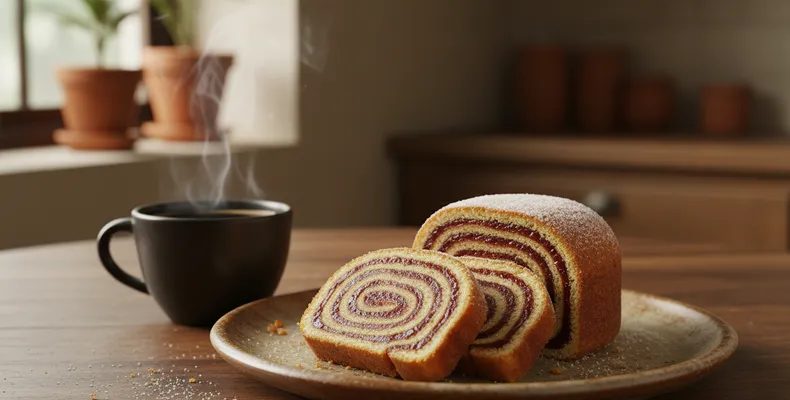
Few desserts capture the soul of Pernambuco cuisine as well as bolo de rolo (a thin rolled cake). Delicate, with ultra-thin layers of cake alternating with melted guava paste, it is both simple and sophisticated. Slicing it and watching those perfect circles spiral into view is almost a spectacle, and tasting that soft, sweet flavor is an experience that warms the heart of anyone who cooks at home.
If you have always wanted to master this classic recipe, you have come to the right place. We will walk through each step together, from choosing the ingredients to the secret of rolling the cake without breaking it. With a little patience and care, you will realize that making bolo de rolo at home is entirely possible, and the result impresses any guest.
Bolo de rolo is a descendant of the Portuguese colchão de noiva ("bride's mattress"), a rolled cake brought over by the colonizers. In Pernambuco, local confectioners adapted the recipe by replacing the almond filling with guava paste, an abundant and inexpensive ingredient in the region, and refined the technique until they achieved the paper-thin layers we know today. So important to the state's identity, it has been recognized as a cultural and intangible heritage of Pernambuco, a symbol of Northeastern pride and tradition.
Recipe overview
- Dish: traditional Pernambuco bolo de rolo
- Origin: Pernambuco, Brazil
- Region/tradition: Northeastern, Pernambuco tradition
- Category: dessert
- Difficulty: medium to high
- Prep time: 1h30
- Yield: 12 slices
Ingredients — cake
- 250 grams (about 1 cup + 2 tbsp) unsalted butter at room temperature
- 250 grams (about 1¼ cups) refined sugar
- 6 eggs, yolks and whites separated
- 250 grams (about 2 cups) sifted all-purpose flour
- 1 teaspoon baking powder
- 1 pinch of salt
Ingredients — filling
- 500 grams (about 1 lb) good-quality firm guava paste (goiabada cascão)
- Half a glass of water to soften the guava paste
Ingredients — for rolling
- A little sugar to dust the cloth
Instructions
- Start with the filling, as it needs to cool a bit before use.
- Cut the guava paste into pieces and heat over low heat with the water, stirring constantly until it forms a smooth, thick cream; set aside.
- Beat the butter with the sugar until you get a light, fluffy cream.
- Add the yolks one at a time, beating well after each addition.
- Gently fold in the sifted flour along with the baking powder.
- Separately, whip the egg whites with the pinch of salt until stiff peaks form.
- Fold the egg whites into the batter with gentle bottom-to-top movements to keep it light, until you have a creamy batter that is neither too runny nor too firm.
- Line a large rectangular baking pan with greased parchment paper and spread a thin portion of the batter, covering the entire bottom with a very thin layer.
- Bake in an oven preheated to 200°C (about 400°F) for just a few minutes, only until lightly golden.
- As soon as the first layer comes out of the oven, transfer it to a clean dish towel dusted with sugar.
- Spread a thin layer of still-warm guava paste over the cake and begin rolling with the help of the towel, firmly and delicately.
- Repeat the process, baking each layer separately; with each new layer, place it in continuity with the roll already formed, spread the guava paste, and keep rolling, layer by layer, until the cake is finished.
Tips and variations
- Always work with the batter and guava paste warm, as the heat makes everything more pliable and prevents the cake from breaking when rolling.
- Don't overdo the amount of batter per layer: the thinner it is, the more beautiful the spirals will look when sliced.
- Use a clean dish towel well dusted with sugar to roll firmly without sticking.
- Take your time and set aside a calm moment in the kitchen, because patience is the main ingredient here.
- Guava paste is the classic, irreplaceable filling for the traditional version, but you can try firm dulce de leche or chocolate spread for homemade variations.
- If you don't have unsalted butter, use salted butter and skip the pinch of salt in the recipe.
- Regular all-purpose flour works perfectly, with no need for special types.
- Store the cake for up to five days at room temperature, wrapped in plastic wrap or in a sealed container, away from moisture.
- Freeze for up to two months; simply wrap it well and let it thaw naturally before serving.
- Many fans think it tastes even better the next day, when the flavors settle.
Because it is a dessert rich in butter, sugar, and guava paste, bolo de rolo is calorie-dense: a medium slice provides around 250 to 320 calories, with a good amount of carbohydrates and fats. That's why it's the kind of treat to enjoy in small portions and on special occasions, alongside a good cup of coffee.
Now that you know every secret of this recipe, it's time to roll up your sleeves and feel the joy of watching your own bolo de rolo take shape. Don't worry if the first layers don't come out perfect: practice makes perfect, and every attempt will already be delicious. Make it, share it with those you love, and celebrate a little piece of Pernambuco culture in your kitchen.