
Traditional pierogi ruskie: the boiled Polish dumplings of potato and cheese with onion in butter
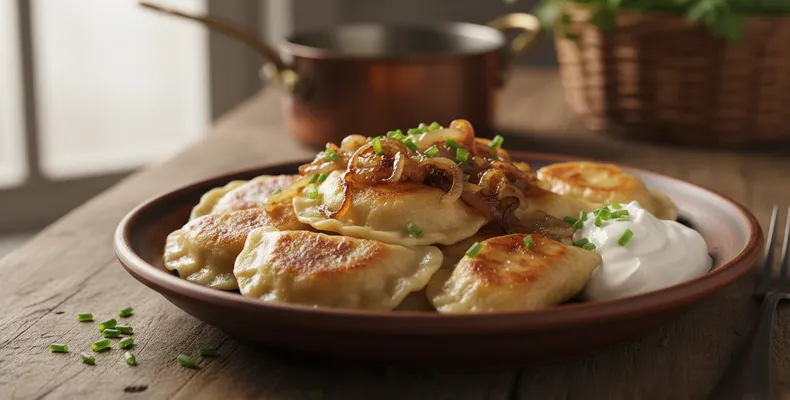
Pierogi are the boiled dumplings Poland has eaten since the Middle Ages, with fillings ranging from meat to fruit. The ruskie, despite the name, is not Russian: it comes from Red Ruthenia, a region that is now western Ukraine and southeastern Poland, where potato and fresh cheese were the most plentiful things around.
It is the everyday pierogi and also the one for Christmas Eve, when the Polish supper has no meat. The filling is simple, mashed potato, twaróg cheese and browned onion, and the dough even more so: flour, hot water, an egg and salt, kneaded until smooth and soft as an earlobe.
Boiled in water and served with butter, onion and sour cream, or quickly fried after boiling until golden, they are Polish comfort food par excellence. They make a lot and freeze perfectly.
Recipe card
- Origin: Poland
- Category: Filled pasta, main course
- Difficulty: Medium
- Preparation time: 1 hour
- Cooking time: 30 minutes
- Yield: about 40 pierogi, 6 servings
Ingredients — dough
- 500 g all-purpose flour
- 1 egg
- 1 cup hot water (not boiling)
- 2 tablespoons oil or melted butter
- 1 teaspoon salt
Ingredients — filling and finishing
- 600 g potatoes, boiled and mashed while still hot
- 300 g fresh cheese such as twaróg, pressed ricotta or crumbled fresh farmer's cheese
- 2 large onions, chopped
- 80 g butter
- Salt and black pepper to taste
- Sour cream or crème fraîche with lemon to serve
- Chopped chives to serve
Method
- Brown half of the onion in 30 g of butter until soft and golden. Mix with the mashed potato and the cheese, season generously with salt and pepper and let cool.
- For the dough, mix the flour and salt, make a well in the center, add the egg, oil and hot water and stir with a fork until it comes together. Knead for 8 minutes until smooth and elastic. Cover and rest 30 minutes.
- Roll the dough out on a floured surface to 2 mm thick and cut 7 cm circles with a glass.
- Place a heaped teaspoon of filling in the center of each circle, fold into a half-moon and press the edges firmly with your fingers, leaving no air inside.
- Bring a large pot of salted water to a boil and cook the pierogi in batches, without crowding. When they float, count another 2 minutes and remove with a slotted spoon.
- Brown the rest of the onion in the remaining butter until caramelized.
- Serve the boiled pierogi covered with the onion and butter, or fry them quickly in that butter until golden on both sides.
- Finish with sour cream and chives.
Tips and variations
- Keep the dough you are not using covered with a cloth so it does not dry out.
- Edges that will not stick: brush with a little water before sealing.
- Raw pierogi freeze well on a tray and then in a bag; cook straight from the freezer with 2 extra minutes.
- Other classic fillings: sauerkraut with mushrooms, ground cooked meat, or fruit (blueberry, strawberry) with sugar and cream.
- Fried bacon along with the onion is the festive version.
- Very wet ricotta makes the filling soft: drain well or press in a cloth.
- Leftovers fried in butter the next day are even better.
Making pierogi is family work, with everyone sealing half-moons at the kitchen table. Make plenty: they disappear fast.