
Traditional Saudi kabsa: the spiced chicken rice with tomato and loomi (dried lime)
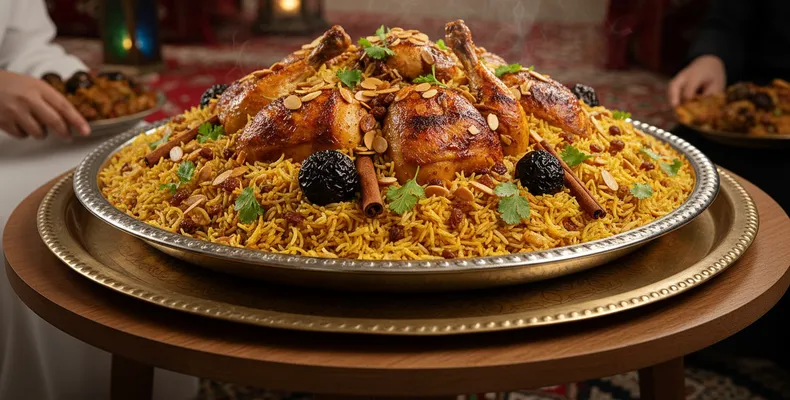
If there is one dish that gathers the Saudi family around a large shared platter, that dish is kabsa. Considered the national dish of Saudi Arabia, it consists of long, fragrant rice cooked together with chicken (or lamb) and a symphony of spices, all tinted golden by the broth of its own cooking. It is food for celebration, gathering and hospitality, served at feasts, weddings and Friday dinners.
The great secret of kabsa lies in the balance between the richness of the spices and the citrus acidity that cuts through the fat. That is where loomi comes in, the dried black lime typical of the Persian Gulf. It is made from limes boiled in salted water and then dried in the sun until dark and light as wood. Pierced and dropped whole into the pot, loomi releases an earthy, slightly bitter perfume that is the dish's signature, impossible to confuse with any other spiced rice.
The word kabsa comes from Arabic and refers to the act of "pressing" or bringing everything together in a single pot, which reveals the practical essence of the dish: meat and rice cooked in the same broth, with no flavor wasted. Every region of the peninsula has its variation, with spice blends passed from mother to daughter, and some say there are no two identical kabsas in all of Arabia.
Making kabsa at home is simpler than it looks and rewards you with a perfume that fills the whole kitchen. In this recipe, you will prepare the chicken version, the most common for everyday meals. Get ready for fluffy rice, full of layers of flavor, crowned with golden pieces of chicken and that citrus touch of loomi that makes all the difference.
Recipe card
- Origin: Saudi Arabia
- Region/tradition: Arabian Peninsula (Persian Gulf)
- Category: Main course
- Difficulty: medium
- Prep time: 30 minutes
- Cooking time: 1 hour
- Serves: 6
Ingredients
- 1 whole chicken cut into pieces (about 1.5 kg)
- 3 cups basmati rice
- 3 tablespoons oil or clarified butter (ghee)
- 2 large onions, chopped
- 5 garlic cloves, minced
- 1 tablespoon grated ginger
- 4 ripe tomatoes, chopped
- 3 tablespoons tomato paste
- 3 loomi (dried limes), pierced
- 4 cloves
- 4 cardamom pods
- 1 cinnamon stick
- 2 bay leaves
- 1 teaspoon ground cumin
- 1 teaspoon ground coriander
- 1/2 teaspoon turmeric
- 1/2 teaspoon black pepper
- 1/2 teaspoon grated nutmeg
- 1 pinch ground cinnamon
- 6 cups hot water
- Salt to taste
- 1/4 cup slivered almonds to serve
- 1/4 cup raisins to serve
- Chopped fresh cilantro to finish
Method
- Heat the oil or ghee in a large pot and sauté the onion until soft and lightly golden.
- Add the garlic and ginger and sauté for another minute, until fragrant.
- Add the chicken pieces and sear over high heat until browned on all sides.
- Add the chopped tomato, tomato paste and all the ground spices, stirring well to coat the chicken.
- Add the cloves, cardamom, cinnamon stick and bay leaves.
- Pierce the loomi with a fork and drop them whole into the pot.
- Add the hot water and salt, cover and cook over medium heat for about 30 minutes, until the chicken is tender.
- Carefully remove the chicken pieces from the broth and set aside.
- Rinse the basmati rice under running water until the water runs clear and drain well.
- Add the rice to the boiling broth, adjust the salt and cook covered over low heat for about 15 to 18 minutes, until the liquid is absorbed and the rice is fluffy.
- Meanwhile, brown the reserved chicken under the oven broiler or in a skillet, to crisp the outside.
- Quickly toast the slivered almonds and sauté the raisins in a little butter.
- Serve the rice on a large platter, place the chicken on top and finish with almonds, raisins and fresh cilantro.
Tips and variations
- If you cannot find loomi, use the peel of 1 lime dried in the oven or substitute lime zest and a little juice at the end of cooking. The flavor is not identical, but it works well in a pinch.
- Swap the chicken for cubed lamb or beef, increasing the cooking time until the meat is tender.
- For a more fragrant kabsa, add a pinch of saffron threads dissolved in hot water to the rice.
- Do not skip browning the chicken at the end: it is what gives the crisp contrast against the soft rice.
- Rinsing the basmati rice well is essential for it to be fluffy and not mushy.
- Serve kabsa with a fresh tomato and cucumber salad and with the spicy Saudi tomato sauce called daqoos, for balance.
- Keep leftovers in the fridge for up to 3 days in a sealed container; reheat with a splash of water so the rice does not dry out.
- Kabsa also freezes well for up to 2 months, preferably without the crunchy toppings, which should be added when serving.
A charming curiosity: in Saudi tradition, kabsa is served on a huge platter placed in the center, and everyone eats together with the right hand, a gesture of sharing and hospitality deeply rooted in Bedouin culture. Inviting someone to a kabsa is opening the doors of your home. Try making yours and gather the people you love around the same platter.