
Traditional Syrian kibbeh: fried bulgur and meat croquettes stuffed with meat, onion and pine nuts
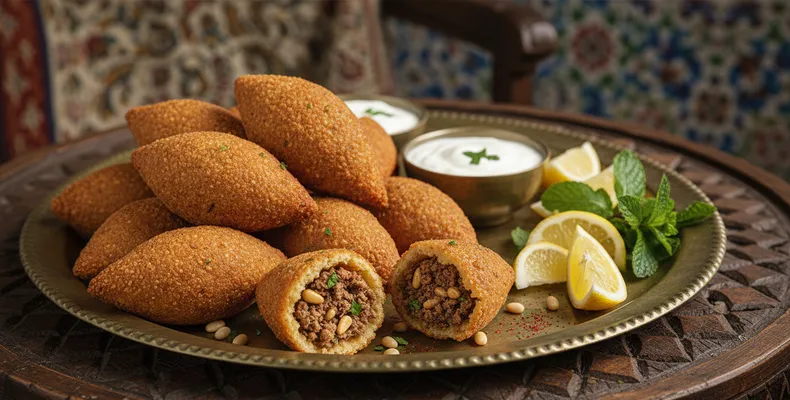
Kibbeh is the national dish of Syria and Lebanon, and Aleppo, the gastronomic capital of the Levant, has dozens of versions: cooked in yogurt, in pomegranate sauce, raw, baked in a tray, in fried croquettes. The name comes from the Arabic word for ball, and the torpedo shape of the fried croquettes is the best known in the world, the one that reached Brazil with Syrian and Lebanese immigrants and became the quibe of every snack bar.
The shell is a dough of fine bulgur, soaked and squeezed, blended with lean meat, onion and spices until it becomes a smooth paste. The filling, the hashwe, is ground meat sautéed with onion, pine nuts, cinnamon, allspice and a touch of sumac, which gives the tang. Shaping the thin shell, with a hand wet in ice water, is the skill Syrian women learn from childhood.
Fried in very hot oil until golden, kibbeh are crispy outside and juicy inside. They are eaten hot or warm, with yogurt, lemon, mint and a tomato and cucumber salad. They make many and freeze well raw, which makes them the appetizer of every party in the Levant.
Recipe card
- Origin: Syria and the Levant
- Category: Fried croquette, main course or mezze
- Difficulty: Hard
- Preparation time: 1 hour
- Cooking time: 30 minutes
- Serves: about 20 kibbeh, 6 portions
Ingredients — shell
- 2 cups fine bulgur
- 500 g lean beef or lamb, ground twice
- 1 small onion, grated and squeezed
- 1 teaspoon salt
- 1 teaspoon ground allspice
- 1/2 teaspoon ground cinnamon
- 1/2 teaspoon black pepper
- 1 teaspoon dried mint (optional)
- Ice water for shaping
Ingredients — filling
- 300 g ground lamb or beef (with a little fat)
- 2 medium onions, finely chopped
- 3 tablespoons butter or olive oil
- 1/3 cup pine nuts (or chopped walnuts)
- 1 teaspoon ground allspice
- 1/2 teaspoon cinnamon
- 1 teaspoon sumac
- Salt and black pepper to taste
- Oil for deep frying
Method
- Cover the bulgur with warm water for 20 minutes, drain and squeeze very well in a cloth until dry.
- For the filling, brown the pine nuts in the butter and set aside. In the same pan, sauté the onion for 8 minutes, add the meat and cook until browned and dry. Season with the allspice, cinnamon, sumac, salt and pepper, mix in the pine nuts and let cool.
- For the shell, pulse the bulgur, lean meat, squeezed onion and seasonings in the food processor until a smooth, sticky dough forms. If dry, add spoonfuls of ice water. Refrigerate for 30 minutes.
- With hands wet in ice water, take a portion of dough the size of an egg, make a ball and push your index finger into the center, rotating, to open a thin, hollow cup-shaped shell.
- Fill with a spoonful of filling, close the opening by pinching the dough and shape into a torpedo with pointed ends, smoothing with wet hands.
- Repeat until the dough is used up, arranging the kibbeh on a tray.
- Heat the oil to 180 °C and fry in batches, 4 or 5 at a time, for 4 to 5 minutes, turning, until golden brown.
- Drain on paper towels and serve hot with yogurt, lemon and mint.
Tips and variations
- A thin shell is the goal: the thinner, the crispier and lighter the kibbeh.
- Dough that cracks when shaping is dry: blend with more ice water.
- Kibbeh bil sanieh: the same dough and filling in layers in a baking dish, drizzled with butter and baked, much easier.
- Kibbeh labaniyeh: croquettes cooked in a yogurt sauce with mint and garlic, the Damascus dish.
- They freeze raw, already shaped; fry straight from frozen in slightly less hot oil.
- Without a food processor, pound the dough in a mortar or knead by hand for longer.
- Oil that is not hot enough makes them soggy; too hot burns them before the center cooks: 180 °C is the point.
Fried kibbeh is the appetizer Syria gave the world and Brazil adopted. Made at home, with a thin shell and a filling fragrant with cinnamon and pine nuts, it is something else entirely.