
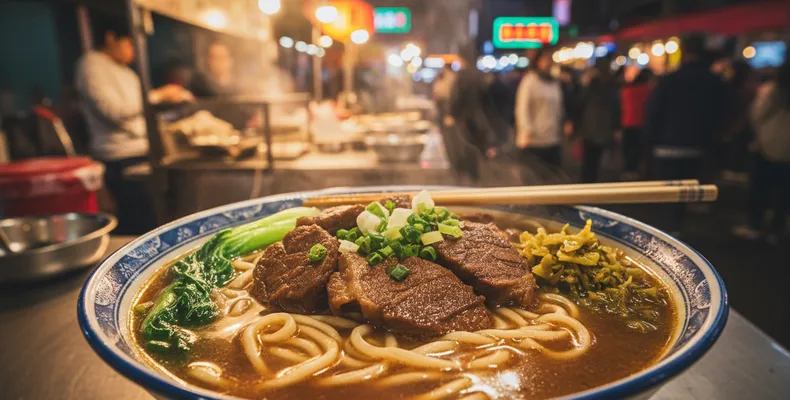
Traditional Taiwanese beef noodle soup: niu rou mian with dark broth, star anise and tender shank
Taipei holds an annual festival just to elect the best beef noodle soup, and the lines at the winning shops wrap around the block. Niu rou mian was born in the 1950s, in the military villages of the soldiers who arrived from the mainland with Chiang Kai-shek, many from Sichuan, who adapted the spicy beef stew of home to the island's ingredients. It became the dish that most defines Taiwanese food.
The most popular style is hong shao, the red broth: the meat, preferably shank with tendon, is browned with ginger, garlic, scallion and the spicy bean paste doubanjiang, and cooked for hours in broth with soy sauce, rice wine, rock sugar, tomato and a spice pouch with star anise, cinnamon and Sichuan pepper. The result is a dark, full-bodied broth, slightly sweet and spicy.
In the bowl, thick, springy wheat noodles, big pieces of meat that fall apart, blanched bok choy, scallion and suan cai, the sour pickled mustard greens everyone adds to taste. It is lunch, dinner and late-night food, and it gets better every day in the fridge.
Recipe card
- Origin: Taipei, Taiwan
- Category: Noodle soup, main course
- Difficulty: Medium
- Preparation time: 30 minutes
- Cooking time: 3 hours
- Serves: 6
Ingredients — broth and beef
- 1.5 kg beef shank (with tendon, if possible) in 5 cm pieces
- 3 tablespoons oil
- 1 piece of ginger, 6 cm, sliced
- 6 garlic cloves, crushed
- 4 scallions in pieces
- 2 tablespoons doubanjiang (Sichuan spicy bean paste)
- 2 ripe tomatoes, quartered
- 1 onion, quartered
- 1/2 cup soy sauce
- 2 tablespoons dark soy sauce (optional, for color)
- 1/4 cup Shaoxing rice wine
- 2 tablespoons rock sugar or brown sugar
- 3 star anise
- 1 cinnamon stick
- 1 teaspoon Sichuan peppercorns
- 2 bay leaves
- 1 piece of dried tangerine peel (optional)
- 2 liters beef stock or water
- Salt to taste
Ingredients — bowl
- 600 g thick fresh wheat noodles (or 400 g dried, udon or ramen style)
- 6 heads of bok choy, halved
- 6 scallions, sliced
- 1/2 cup chopped pickled mustard greens (suan cai), or Chinese mustard pickles
- Chili oil to taste
Method
- Cover the beef with cold water, boil for 5 minutes, drain and rinse to remove impurities.
- In a large pot, heat the oil and sauté the ginger, garlic and scallion for 2 minutes.
- Add the doubanjiang and sauté for 1 minute, until the oil turns red.
- Add the beef, tomato and onion and sauté for 5 minutes.
- Pour in the soy sauce, dark soy sauce, wine and sugar, stir, and add the stock, star anise, cinnamon, Sichuan pepper, bay leaves and tangerine peel.
- Boil, skim the foam, cover and simmer on low for 2 hours 30 minutes to 3 hours, until the meat is very tender and the tendon gelatinous.
- Remove the whole spices and the pieces of ginger and scallion, taste and adjust the salt.
- Cook the noodles according to the package and blanch the bok choy for 1 minute in the same water.
- Assemble the bowls: noodles, bok choy, pieces of beef, boiling broth over, scallion and the pickled greens. Chili oil on the side.
Tips and variations
- Shank with tendon is the right cut: it turns tender and gelatinous; chuck and brisket also work.
- In a pressure cooker, 50 minutes instead of 3 hours.
- Clear broth version (qing dun): no doubanjiang or soy sauce, just beef, ginger and salt, with a clear broth.
- The broth is better the next day and freezes for 3 months; assemble the bowls fresh.
- Fresh wheat noodles from Asian stores make a difference; thick spaghetti is the stand-in.
- A boiled egg marinated in the broth itself is the addition of many households.
- Adjust the heat in the bowl with the chili oil, not in the pot.
A big bowl of niu rou mian, with the dark broth steaming and the beef falling apart in the chopsticks, is the dish Taiwan loves most. Make the broth unhurried, and it lasts the whole week.