
Traditional pad thai: Thai stir-fried rice noodles with shrimp, tamarind, peanuts and bean sprouts
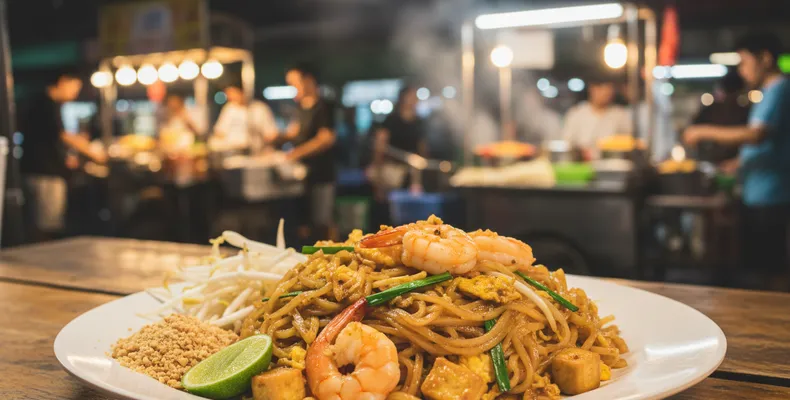
Pad thai is younger than it looks. In the 1940s, the Thai government, wanting to unify the country and reduce rice consumption during the war, promoted a stir-fried rice noodle as the national dish, distributed the recipe and encouraged street carts to sell it. The name, Thai-style fried noodles, was part of the campaign. It worked: today it is the most ordered Thai dish on the planet.
The flavor comes from a sauce that balances three things: the sourness of tamarind, the sweetness of palm sugar and the saltiness of fish sauce. No ketchup, no soy sauce, no ground peanuts in the sauce. The peanuts go on top, along with raw bean sprouts, garlic chives and lime, and everyone adjusts the dish at the table with dried chili and sugar.
The rule of the Bangkok carts is to make one or two servings at a time, in a very hot wok, with everything chopped and at hand before lighting the fire. The noodles are soaked in warm water, never boiled, and finish softening in the sauce. It is ten minutes of heat, and none of them can wait.
Recipe card
- Origin: Thailand
- Category: Main course, stir-fried noodles
- Difficulty: Medium
- Preparation time: 30 minutes (including soaking the noodles)
- Cooking time: 10 minutes
- Serves: 2
Ingredients — sauce
- 3 tablespoons tamarind pulp (concentrate diluted with water to a thick juice)
- 3 tablespoons palm sugar or brown sugar
- 3 tablespoons fish sauce (nam pla)
- 1 teaspoon dried chili flakes (optional)
Ingredients — stir-fry
- 200 g dried rice noodles, thin fettuccine style (sen lek)
- 200 g medium shrimp, cleaned
- 100 g firm tofu in small cubes
- 2 eggs
- 2 tablespoons chopped sweet-and-salty preserved radish (optional)
- 2 garlic cloves, chopped
- 2 tablespoons small dried shrimp (optional)
- 3 tablespoons oil
- 1 cup bean sprouts
- 1/2 bunch garlic chives (or regular scallions) in 4 cm pieces
- 1/3 cup roasted peanuts, coarsely chopped
- 2 lime wedges
- Extra raw bean sprouts, chili flakes and sugar for the table
Method
- Soak the noodles in warm water for 30 minutes, until pliable but still firm. Drain.
- Mix the sauce ingredients in a small pan and heat until the sugar dissolves. Taste: it should be sour, sweet and salty in equal parts.
- Heat the wok over high heat with 1 spoon of oil and stir-fry the shrimp for 1 minute per side. Set aside.
- Add the rest of the oil, the garlic, tofu, radish and dried shrimp and fry for 1 minute.
- Push everything to one side, crack the eggs into the wok, stir until almost cooked and mix in.
- Add the noodles and the sauce and stir-fry for 2 to 3 minutes, tossing and turning, until the noodles absorb the sauce and soften. If it dries out, add 2 spoons of water.
- Return the shrimp, add the bean sprouts and garlic chives and stir-fry for another 30 seconds.
- Serve immediately with the peanuts on top, the lime and, on the side, raw sprouts, chili and sugar for everyone to adjust.
Tips and variations
- Make at most two servings at a time: an overfull wok steams instead of frying.
- Over-soaked noodles fall apart; under-soaked stay hard. Taste a strand before draining.
- Without tamarind, use lime juice with a little rice vinegar, knowing the flavor changes.
- Chicken pad thai: thin strips of thigh instead of shrimp.
- Vegetarian version: no fish sauce, use light soy sauce and more tofu.
- Preserved radish and dried shrimp give the street-cart taste, but the dish works without them.
- Everything cut and measured before turning on the heat: there is no time to chop anything during the stir-fry.
A well-made pad thai is sour, sweet and salty in the same forkful, with the crunch of peanuts and sprouts. It is the taste of a night in Bangkok, and it fits in a wok at home.