
Traditional lu pulu: Tongan taro leaves with beef and onion in coconut cream, baked in the umu
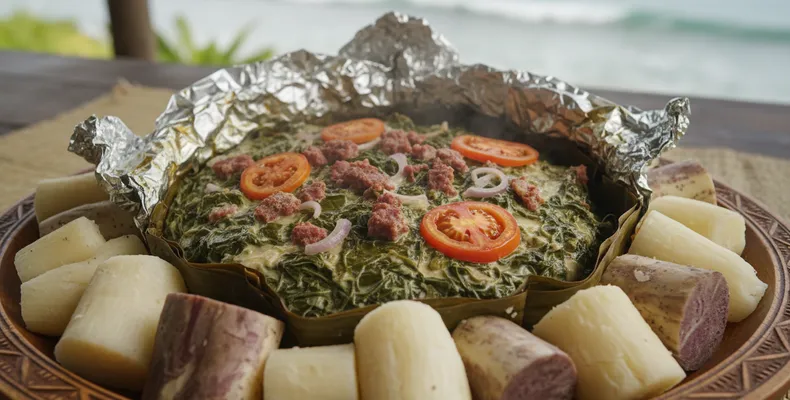
In Tonga, lu is taro leaf and pulu is beef, and lu pulu is the dish never missing from any Sunday, funeral, wedding or church feast. As in Samoa, the traditional cooking is in the umu, the stone oven in the ground, and the most used meat, by irony of history, is canned, which arrived with the ships of the 20th century and became as Tongan as coconut.
The taro leaves line a banana-leaf parcel and receive the beef, onion, tomato and coconut cream in quantity. The package is tightly closed and goes into the heat for two hours, until the taro leaves completely lose their texture and become, with the coconut and meat, a thick, dark, creamy stew. It is served with boiled root vegetables, taro, cassava, yam, and nothing else.
Lu sipi, with mutton, and lu moa, with chicken, follow the same recipe and are the siblings of lu pulu. Outside Tonga, frozen taro leaves from Asian and Latin stores work, and the home oven replaces the umu with dignity.
Recipe card
- Origin: Tonga
- Category: Main course, beef with taro leaves in coconut
- Difficulty: Easy
- Preparation time: 30 minutes
- Oven time: 2 hours
- Serves: 6
Ingredients
- 40 young taro leaves, thick rib removed (or 600 g large-leaf spinach)
- 500 g corned beef (2 small cans) in pieces, or 600 g cooked shredded chuck
- 2 large onions, sliced
- 2 tomatoes, chopped
- 500 ml thick coconut cream
- 1 teaspoon salt
- 1/2 teaspoon black pepper
- Banana leaves and aluminum foil
- Boiled cassava, taro or yam to serve
Method
- Preheat the oven to 170 °C. Soften the banana leaves over a flame.
- Line a deep baking dish or cast-iron pot with foil and then with banana leaves, leaving overhang to close.
- Cover the bottom with a thick layer of overlapping taro leaves.
- Spread the beef, onion and tomato on top, season with salt and pepper and cover with the rest of the taro leaves.
- Pour the coconut cream over everything, letting it run through the layers.
- Close the banana leaves over the top, then the foil, pressing well so no steam escapes.
- Bake for 2 hours (1 hour 15 minutes with spinach), until the taro leaves are completely soft and melting into the coconut.
- Open the package at the table and serve with the boiled roots.
Tips and variations
- Raw or undercooked taro leaves cause irritation: the long time is mandatory.
- Lu sipi: pieces of bone-in mutton, 30 more minutes in the oven.
- Lu moa: skinless chicken thighs, same time.
- Canned coconut cream: use only the thick part, or thick coconut milk without water.
- On a lidded barbecue, the package over the grill on indirect heat for 2 hours comes close to the umu.
- Leftovers reheat in the oven still wrapped and become even creamier.
- A whole chili in the package is the addition of those who like it.
Lu pulu is Tonga's Sunday: taro leaves melted into coconut cream with beef and onion, in a package opened steaming at the table. Filling, creamy and made for the whole family.