
Traditional sadza ne nyama: the Zimbabwean maize mash with stewed beef and greens
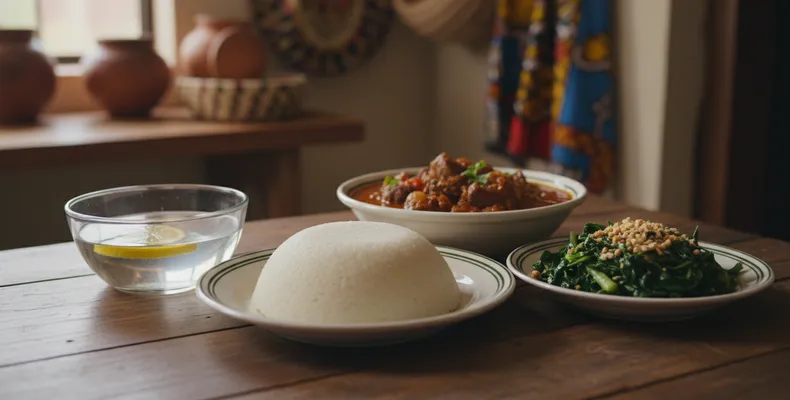
Sadza is Zimbabwe: a white maize mash, unsalted, firm enough to be shaped by hand into little balls used to scoop up the sauce. It is lunch and dinner throughout the country, and a Zimbabwean who goes a day without sadza says they have not eaten. The word nyama means meat, and sadza ne nyama is the most common pairing, with muriwo greens completing the plate.
The meat is cooked slowly with onion, tomato and little else, until tender in a simple red sauce. The greens are sautéed with onion and tomato and, in the most traditional version, with dovi, ground peanuts that make them creamy. Sadza requires attention: the flour goes into boiling water in two stages and is stirred with a thick wooden spoon, the mugoti, until the mass firms up and pulls away from the pot.
It is eaten with the right hand, after washing it in the bowl of water brought to the table: a ball of sadza flattened with the thumb, dipped in the sauce, and a piece of meat. It is the same family as Kenyan ugali, Zambian nshima and South African pap, and the same way of eating.
Recipe card
- Origin: Zimbabwe
- Category: Main course, maize mash with meat
- Difficulty: Easy
- Preparation time: 20 minutes
- Cooking time: 1 hour 30 minutes
- Serves: 4
Ingredients — nyama (meat)
- 700 g beef (chuck or boneless short rib) in cubes
- 2 tablespoons oil
- 1 large onion, chopped
- 3 ripe tomatoes, chopped
- 1 tablespoon tomato paste
- 1 garlic clove, chopped
- 1 teaspoon paprika or curry powder (optional)
- 1 1/2 cups water
- Salt and black pepper to taste
Ingredients — muriwo (greens) and sadza
- 1 bunch collard greens in thin strips
- 1 small onion, chopped
- 1 tomato, chopped
- 2 tablespoons oil
- 3 tablespoons finely ground roasted peanuts (dovi, optional)
- Salt to taste
- 2 cups fine white maize flour
- 4 1/2 cups water
Method
- For the meat, heat the oil and brown the cubes for 8 minutes. Add the onion and garlic and sauté for 5 minutes.
- Add the tomato, tomato paste, paprika, salt and pepper and cook for 5 minutes. Pour in the water, cover and cook on low for 1 hour, until the meat is tender and the sauce thick.
- For the greens, sauté the onion in the oil for 5 minutes, add the tomato and cook until it breaks down. Add the greens, salt and 1/4 cup water and cook covered for 10 minutes. Mix in the ground peanuts and cook for another 3 minutes.
- For the sadza, boil 3 cups of water in a thick-bottomed pot. Mix 1 cup of flour with 1 1/2 cups cold water into a thin porridge and pour into the boiling water, stirring.
- Cook on medium, stirring, for 5 minutes, until it thickens and bubbles.
- Lower the heat and add the rest of the flour little by little, stirring hard with the wooden spoon, folding the mass, for 8 to 10 minutes, until firm, smooth and pulling away from the pot.
- Shape the sadza in a wet bowl and turn out onto the plate. Serve with the meat and sauce on one side and the greens on the other, with a bowl of water for washing hands.
Tips and variations
- Sadza is unsalted on purpose: the seasoning comes from the sauce.
- Heavy pot and strong wooden spoon: the flour sticks and the mass is heavy to stir.
- Millet or sorghum sadza (sadza rezviyo) is the oldest version, darker and more nutritious.
- Chicken, goat or dried fish instead of beef are equally common.
- Greens with peanuts (muriwo une dovi) are the feast vegetable; without peanuts, the everyday one.
- Leftover sadza fried in slices the next day is a popular breakfast.
- Eat by hand: sadza with a fork is not the same thing.
Sadza, meat and greens are Zimbabwe's table from Monday to Sunday: white maize, red sauce and green from the collards, eaten by hand and without hurry. Simple, filling and honest.