
Creamy Minas-style Angu: Traditional Recipe with Cornmeal
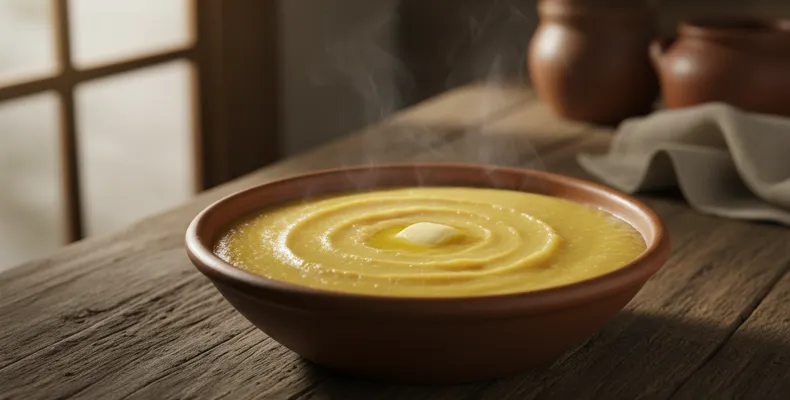
Few dishes capture the simplicity and comfort of a Minas Gerais table quite like angu. Made basically with cornmeal and water, it may seem humble at first glance, but it reveals all its magic when it turns creamy, soft, and cooked just right. In Minas Gerais, angu is that side dish that wraps around your food, pairing beautifully with meats, sauces, and stews in a way that warms the heart.
If you've ever tried making angu at home and it turned lumpy or too heavy, don't worry. In this article we'll show you the path to a creamy, smooth angu, with practical tips that make all the difference. It's an affordable, comforting recipe that brings the flavor of the countryside straight to your kitchen.
Angu has deep roots in Brazilian history and in the heritage of Indigenous and African peoples, who already prepared porridges and doughs made from corn and other grains. In Minas Gerais, the dish became a symbol of farm cooking, present on abundant tables alongside meats, collard greens, eggs, and carefully made sauces. Cheap, nutritious, and comforting, angu has crossed generations and remains that heartwarming side dish that brings back memories of grandma's house.
Recipe details
- Dish: Creamy Minas-style angu
- Origin: Brazil
- Region/tradition: Minas Gerais cuisine
- Category: side dish
- Difficulty: easy
- Preparation time: 30 minutes
- Yield: 4 servings
Ingredients
- 1 cup of cornmeal
- 4 cups of water (adjustable according to the desired texture)
- 1 tablespoon of butter or oil
- Salt to taste
Preparation
- In a bowl, dissolve the cornmeal in about 1 cup of cold water, stirring well until you get a smooth liquid, to prevent lumps from forming when it hits the hot water.
- In a pot, bring the remaining 3 cups of water to a boil with the salt and butter.
- When it starts to boil, lower the heat and gradually pour in the dissolved cornmeal mixture, stirring nonstop with a wooden spoon or a whisk.
- Keep stirring constantly so the angu cooks evenly and doesn't stick to the bottom of the pot.
- Cook over low heat for about 15 to 20 minutes, stirring the whole time, until the mixture thickens and begins to pull away from the bottom of the pot.
- Check the consistency: creamy angu has a smooth, glossy texture that slides off the spoon without being too runny.
- If you want it firmer, cook a little longer; if you prefer it creamier, add a bit of hot water and stir.
- Taste for salt before serving, and serve it hot.
Tips and variations
- Never add dry cornmeal directly to hot water, as that's exactly what forms those dreaded lumps.
- Stirring nonstop throughout the entire cooking is essential for a smooth texture.
- Use low heat and be patient: angu gets its creaminess from cooking time, not from rushing.
- A spoonful of butter at the end makes the dish silkier and glossier.
- Fine cornmeal results in a smoother texture, while coarser cornmeal gives the angu more body and a slightly rustic touch.
- The butter can be swapped for oil or olive oil, making the recipe fully plant-based.
- Part of the water can be replaced with vegetable, chicken, or beef stock to intensify the flavor.
- Make it with milk in place of some of the water for a richer, softer version.
- Finish with grated queijo minas (a mild Brazilian cheese) on top, creating a delicious contrast between the corn and the cheese.
- Angu is best served right away, still hot and creamy; if there are leftovers, store them in the fridge in a sealed container for up to 3 days.
- To reheat, put it in a pot or the microwave with a little water or milk, stirring until it returns to a soft texture.
- Nutritionally, a serving provides roughly 150 to 200 calories, being a good source of carbohydrates and low in fat when prepared with little butter; corn also offers fiber and slow-release energy.
Making creamy angu at home is, more than just a recipe, a way to keep the tradition of Minas Gerais cuisine alive. How about bringing this countryside flavor into your kitchen?