
Feijao Tropeiro from Minas Gerais: Traditional Recipe with Sausage, Cracklings, and Collard Greens
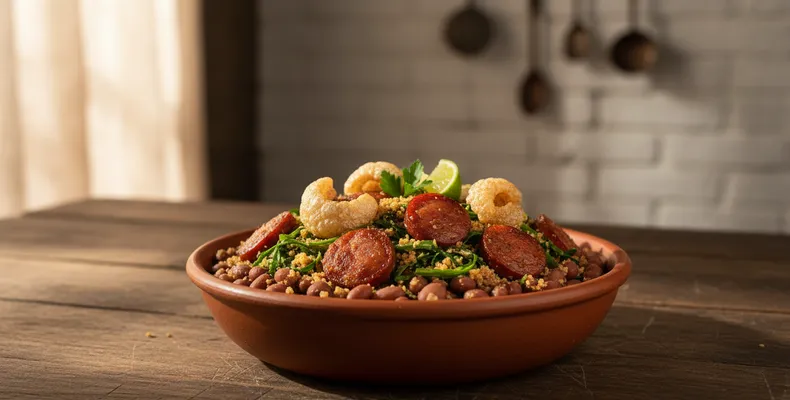
Few dishes capture the soul of the cuisine from Minas Gerais quite like feijao tropeiro. Rustic, hearty, and full of flavor, it brings together beans, cassava flour, sausage, pork cracklings, eggs, and collard greens in a combination that warms the heart and fills the table with comfort. Here at Ui Delicia, we love reviving these traditional recipes passed down from generation to generation, and today you'll learn how to make this delight the way it's done in the kitchens of Minas Gerais.
More than just a dish, feijao tropeiro carries the memory of an old Brazil, of journeys along dirt roads and stops for a hearty meal. If you love real food with that homemade taste, grab your apron and come cook with us.
Recipe details
- Dish: Feijao tropeiro from Minas Gerais
- Origin: Brazil
- Region/tradition: Minas Gerais
- Category: Main course
- Time: 1h30 (not counting pre-cooking the beans)
- Serves: 6 portions
- Difficulty: medium
Ingredients
- 500 grams (about 1 lb) of cooked and drained carioca beans (make sure they're nice and dry)
- 2 cups of toasted cassava flour
- 250 grams (about 9 oz) of calabresa or toscana sausage, sliced into rounds
- 200 grams (about 7 oz) of pork cracklings (torresmo, from pork belly)
- 150 grams (about 5 oz) of diced bacon
- 4 eggs
- 1 bunch of collard greens, very thinly sliced
- 1 large onion, chopped
- 4 cloves of garlic, chopped
- Fresh parsley and chives to taste
- Salt and black pepper to taste
- Oil or lard for sauteing
It's worth using high-quality ingredients, especially the sausage and cracklings, which are responsible for much of the dish's flavor. If you can use lard instead of oil, the result will be even closer to the traditional Minas Gerais style.
Instructions
- Fry the cracklings in a large pot until golden and crispy, then set aside.
- In the leftover fat, brown the bacon and then the sliced sausage. Remove and set aside along with the cracklings, leaving a bit of fat in the pot.
- In the same pot, saute the onion and garlic until golden and fragrant.
- Add the sliced collard greens and saute quickly, just until they wilt without losing their bright color. Set aside a portion of the greens to finish the dish.
- Add the cooked and drained beans, mixing carefully so as not to mash the beans too much.
- Scramble the eggs in a separate skillet, seasoned with a pinch of salt, and stir them into the beans.
- Return the sausage and bacon to the pot and gently mix everything together.
- Add the cassava flour a little at a time, stirring constantly, until you reach the desired texture: neither too dry nor mushy.
- Adjust the salt and pepper and finish with the crispy cracklings, the reserved collard greens, and plenty of fresh parsley and chives.
Tips and variations
- The secret to a good feijao tropeiro is well-drained beans: if they're too wet, the flour turns into a paste and the dish loses its charm.
- Always add the flour last and in small amounts, tasting the texture as you go.
- The cracklings should go on top just before serving, to keep them crispy.
- A touch of lard in the saute makes all the difference in the final flavor.
- For a lighter version, replace the cracklings and bacon with chicken sausage and reduce the amount of fat, though the result will be less traditional.
- For a vegetarian option, leave out the meats and boost the seasoning with onion, garlic, and sauteed mushrooms; the dish changes character but is still tasty.
- The cassava flour can also be swapped for yellow cornmeal, common in some regions.
- Once made, feijao tropeiro keeps well in the fridge for up to three days, in a sealed container.
- Reheat over low heat or in the microwave, and if it's too dry, add a small drizzle of water or broth.
- We don't recommend freezing, since the flour and eggs lose their ideal texture when thawed.
- It's usually served alongside just white rice, extra collard greens, and grilled sausage.
Since it's a hearty dish, feijao tropeiro is calorie-dense: a generous portion runs around 450 to 550 calories, depending on the meats and the amount of fat used. It's rich in protein, fiber, and carbohydrates, working almost like a complete meal.
The dish's name comes from the tropeiros, travelers who journeyed the roads of Minas Gerais in past centuries, driving mule trains to transport goods. Since they needed food that wouldn't spoil easily, they carried beans, flour, pork, and bacon. When they set up camp, they mixed everything in a single pot, creating a practical and nutritious meal. Over time, this road food became a symbol of Minas Gerais cuisine and won over tables all across Brazil. Try making it at home and tell us how it turned out!