
Gaucho Carreteiro Rice: Traditional Recipe with Charque
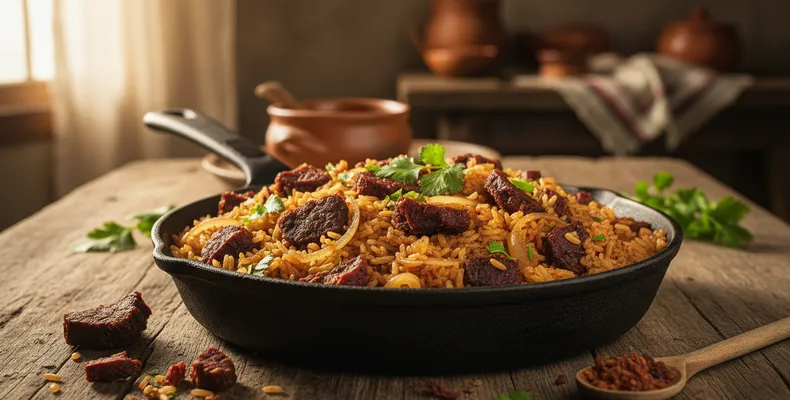
Few dishes capture the soul of gaucho cuisine as well as arroz de carreteiro (carreteiro rice). Simple, rustic, and comforting, it was born on the roads of Rio Grande do Sul and has been passed down through generations without losing its charm. If you want to prepare a meal that fills the house with a wonderful smell and gathers everyone around the table, you've come to the right place.
In this article, we'll dive into the traditional recipe made with charque, that salted and dried beef that gives the dish its personality. You'll find the complete recipe card, step-by-step instructions, tips to get it right the first time, possible substitutions, and even a bit of the history behind this beloved delicacy of the pampas.
Recipe Card
- Dish: Gaucho carreteiro rice with charque
- Origin: Rio Grande do Sul, Brazil
- Region/tradition: Gaucho
- Category: Main dish
- Difficulty: medium
- Time: 1h30 (plus the time to desalt the charque)
- Yield: 6 servings
- Nutritional information: approximately 400 to 500 calories per serving
Ingredients
- 500 grams of charque (salted dried beef)
- 2 cups of white rice
- 1 large chopped onion
- 4 cloves of chopped garlic
- 1 chopped green bell pepper
- 2 ripe tomatoes, seeded and chopped
- 3 tablespoons of oil or lard
- Chopped fresh parsley and green onion to taste
- 4 cups of hot water
- Salt and black pepper to taste (be careful, as the charque is already salty)
Directions
- First of all, desalt the charque well: cut the meat into small pieces and soak it in cold water for a few hours, changing the water at least three to four times.
- If you're in a hurry, boil the charque in water for a few minutes, drain, and repeat the process twice until the salt is reduced.
- Once desalted and well drained, cut the charque into small cubes.
- In a large, heavy-bottomed pot, heat the oil or lard and sauté the pieces of meat until they brown and release their aroma, giving the meat time to develop color.
- Add the onion and garlic and sauté until soft and fragrant.
- Add the bell pepper and tomatoes, stirring well to build a flavorful base.
- Add the raw rice and sauté for a minute or two, so the grains absorb the seasonings.
- Pour in the hot water, taste, and adjust the salt carefully, remembering that the charque releases plenty of salt during cooking.
- Cover the pot and cook over low heat until the water evaporates and the rice is soft and fluffy.
- Sprinkle with the fresh parsley and green onion, mix gently, and serve piping hot.
Tips and Variations
- For a more authentic result, cook the carreteiro in a cast-iron or heavy-bottomed pot, which distributes heat better and enhances the flavor.
- Don't rush when sautéing the charque, because that's where the secret of the dish lies.
- For a special touch, many gauchos like to add a pinch of pepper or finish with a drizzle of melted lard.
- If you can't find charque, substitute carne-seca (sun-dried beef), which goes through the same desalting process.
- Leftover barbecue also makes a delicious carreteiro and is a great way to use up the previous day's meat.
- To store, keep the rice in a sealed container in the fridge for up to three days and reheat it with a little water to restore moisture.
- Because it contains charque, the dish tends to be high in sodium, so those who need to watch their salt intake should be thorough with the desalting and avoid adding extra salt.
Per serving, carreteiro rice provides approximately 400 to 500 calories, making it a meal rich in carbohydrates and proteins. It's a hearty dish, ideal for cold days and meals that call for energy.
The name carreteiro comes from the cart drivers who crossed Rio Grande do Sul transporting goods in the 19th century. Since the journeys were long, they needed ingredients that wouldn't spoil easily, and charque, being meat preserved in salt, was perfect. At their stops, they would mix the charque with rice in a single pot, creating a practical, nutritious, and flavorful meal that stood the test of time and became a symbol of the gaucho table. Now it's your turn to bring this tradition into your kitchen and share it with the people you love.