
Homemade Minas-Style Dulce de Leche: A Creamy Traditional Stovetop Recipe
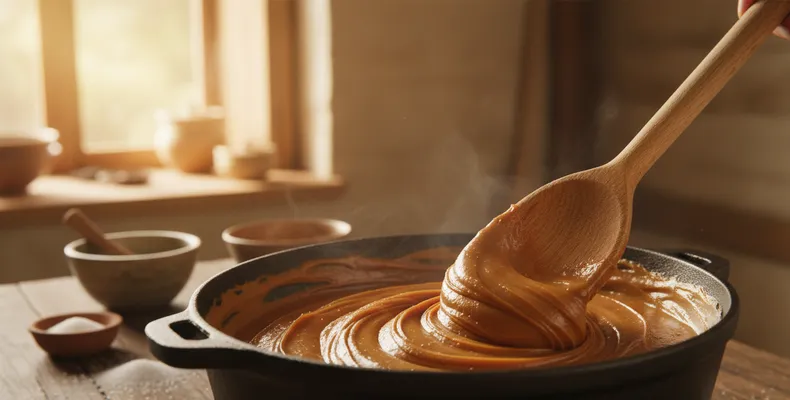
Few things capture the essence of a Minas Gerais table quite like a good dulce de leche (doce de leite). Creamy, glossy, and with that farmhouse flavor, it shows up at breakfast, as dessert, and even as a filling for cakes and cornmeal treats. Best of all, you can make it at home on the stovetop with very few ingredients and a lot of patience.
If you've always thought making dulce de leche was complicated, this article will change your mind. We'll walk through every step together, with tips to nail the consistency, substitution suggestions, and ways to keep that precious little jar fresh for longer. Grab your apron and let's cook.
Dulce de leche has its roots in the need to use up fresh milk before it spoiled, a strong tradition on the farms of Minas Gerais and in several Latin American countries. Cooking it slowly in a pot was a ritual of country kitchens, present at celebrations, visiting days, and hearty coffee breaks. By making this recipe at home, you keep a delicious part of our culture alive.
Recipe card
- Title: Creamy homemade Minas-style dulce de leche on the stovetop
- Origin: Brazil
- Region/tradition: Minas Gerais cuisine
- Category: Dessert/sweet
- Difficulty: medium
- Prep time: 1h30 to 2h
- Yield: about 500 grams of dulce de leche
Ingredients
- 1 liter (about 4 cups) of whole milk, preferably very fresh
- 1 cup of sugar
- 1 pinch of baking soda
- 1 vanilla bean or 1 teaspoon of vanilla extract (optional)
Choosing good-quality milk makes all the difference in the final result. The richer and creamier the milk, the more flavorful your dulce de leche will be. Avoid skim milk, as it makes the sweet thin and lacking that characteristic shine we all love so much.
Instructions
- Put the milk and sugar in a large, heavy-bottomed pot, which helps distribute the heat more evenly and prevents the dulce de leche from burning.
- Place over medium heat and stir until the sugar completely dissolves.
- As soon as the mixture starts to warm up, add the pinch of baking soda and stir again.
- Let it cook over medium-low heat, stirring occasionally at first and more frequently as it thickens.
- Cook for about an hour and a half, until the mixture changes color, turning yellowish and then a beautiful caramel tone.
- Check the consistency: the dulce de leche should coat the back of a spoon, and when you run the spoon across the bottom of the pot, you should see the bottom for a few seconds before the mixture comes back together.
- Remove it from the heat just before reaching the final point, as it thickens more as it cools. For a sliceable dulce de leche, cook it longer until quite firm.
Tips and variations
- Always use a long-handled spoon and protect your hands, because near the end the dulce de leche bubbles and can splatter.
- Stir along the edges and bottom to keep sugar crystals from sticking and burning, which would leave a bitter taste.
- If grains appear, strain the dulce de leche while still hot through a fine sieve to ensure a silky texture.
- If the dulce de leche ends up with crystallized sugar, add a little hot milk and return it to the heat, stirring until smooth.
- For an even more velvety result, add a tablespoon of butter at the end of cooking, making everything shinier and softer.
- For a quicker version, you can make it with cooked condensed milk, though the traditional stovetop flavor is incomparable.
- Those with lactose intolerance can use lactose-free milk.
- The sugar can be swapped for brown sugar or demerara for a more rustic flavor, keeping in mind the color will be darker.
- An extra pinch of salt enhances the caramel flavor.
- Once done, let the dulce de leche cool completely before storing.
- Stored in a clean, well-sealed glass jar, it keeps well in the fridge for up to two weeks.
- If you prefer, freeze it in portions for a few months.
- Always use clean spoons to serve the dulce de leche and avoid contamination, ensuring it lasts longer.
Because it's a concentrated sweet, dulce de leche is high in calories. One heaping tablespoon, about 30 grams, has roughly 90 to 110 calories, plus sugars and a little protein and calcium from the milk. It's that treat to enjoy in moderation, savoring each spoonful with pleasure and without too much guilt. And when you make this recipe at home, you'll fill the kitchen with an aroma that warms the heart.