
Traditional Bahian Fish Moqueca with Dendê and Coconut Milk
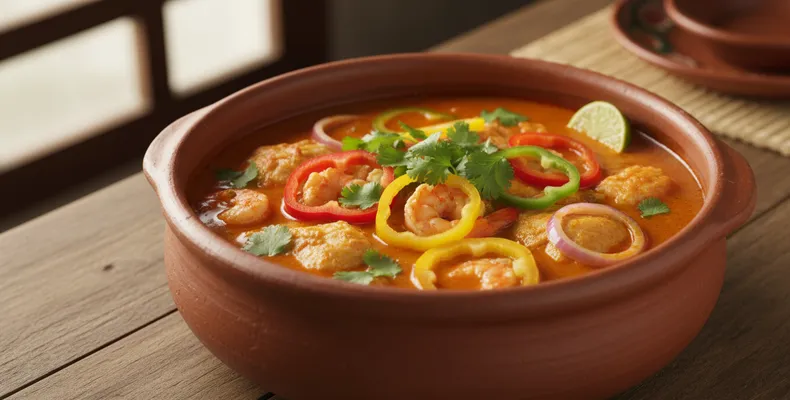
Few dishes capture the soul of Bahian cuisine quite like moqueca. With its striking aroma of dendê (palm oil), the smoothness of coconut milk and the vibrant colors of bell peppers, it's one of those recipes that fill the kitchen with fragrance and bring the whole family to the table. If you've always wanted to make a real moqueca at home, this guide was made for you.
Moqueca is far more than a simple fish stew. It carries centuries of history, blending Indigenous, African and Portuguese influences, along with a cooking technique that values patience and care. Let's dive into the complete recipe, with every detail you need to get it right the first time.
Recipe card
- Origin: Bahia, Brazil
- Region/tradition: Bahian cuisine
- Category: main dish
- Difficulty: medium
- Time: 1h
- Yield: 6 servings
- Fish marinating time: about 30 minutes
- Cooking time: about 25 to 30 minutes
Ingredients — fish and seasoning
- 2.2 lb (1 kg) firm fish steaks, such as snapper, sea bass, grouper or mahi-mahi
- Juice of 1 lime
- 4 garlic cloves, crushed
- Salt to taste
- Black pepper to taste
- A generous handful of chopped cilantro
Ingredients — moqueca
- 3 tablespoons dendê (palm oil)
- 2 large onions, sliced into rings
- 1 red bell pepper, sliced into rings
- 1 yellow bell pepper, sliced into rings
- 1 green bell pepper, sliced into rings
- 4 ripe tomatoes, sliced into rounds
- 400 ml (about 1²/₃ cups) coconut milk
- Chopped cilantro to taste
- Chopped scallions to taste
- Salt to adjust the seasoning at the end
Instructions
- Season the fish with lime juice, garlic, salt, pepper and a little cilantro
- Let the fish marinate in the refrigerator for about 30 minutes so it absorbs the flavors well
- Meanwhile, slice the onions, bell peppers and tomatoes into rounds of similar thickness so they cook evenly
- In a wide pot, preferably a clay pot, start with a drizzle of dendê on the bottom
- Create a layer with part of the onions, bell peppers and tomatoes
- Arrange the fish steaks on top
- Cover with the remaining vegetables, forming new layers
- Pour in the coconut milk and the rest of the dendê, spreading it well over the entire surface
- Cook over medium-low heat and cover the pot
- Don't stir with a spoon, so the fish doesn't fall apart; if needed, just gently swirl the pot
- Let it cook for about 25 to 30 minutes, until the fish is tender and the broth has thickened
- In the final minutes, adjust the salt and finish with plenty of fresh cilantro and scallions
- Serve piping hot, with white rice and pirão (a thick manioc porridge made from the broth)
Tips and variations
- Use good-quality dendê, but in moderation, as its flavor is intense
- Use a clay pot if you can, as it distributes heat gently and keeps the dish hot longer
- Always cook over low heat and avoid boiling too hard, so the fish doesn't dry out and the coconut milk doesn't curdle
- If you can't find the recommended fish, use other firm-fleshed varieties, or even shrimp for a different version
- For a lighter option, reduce the amount of dendê and use light coconut milk, though this will change the traditional flavor
- If you don't have fresh cilantro, you can make up for it with more scallions, but cilantro is an essential part of the dish's identity
- Moqueca tastes even better the next day
- Store it in the refrigerator in a sealed container for up to two days and reheat over low heat, without letting it come to a hard boil
- We don't recommend freezing, as the fish may lose its texture and the coconut milk tends to separate when thawed
- Approximate nutritional information: per serving, moqueca has around 350 to 420 calories, depending on the amount of dendê and coconut milk used
- It's a good source of protein from the fish, along with fats from the dendê and coconut, while the bell peppers and tomatoes contribute vitamins and antioxidants
- It's a nutritious and balanced dish, especially when served with rice and a fresh salad
Moqueca is one of the oldest dishes in Brazil, and its origin is intertwined with the very formation of the country. The word comes from Tupi and referred to an Indigenous technique of roasting fish and seafood wrapped in leaves. With the arrival of Africans and the introduction of dendê and coconut milk, the recipe took on the form we know today in Bahia.
There's a friendly rivalry between the Bahian moqueca and the capixaba version from Espírito Santo. The Bahian version stands out precisely for its use of dendê and coconut milk, which give it an orange color and bold flavor. Preparing a moqueca at home is, more than just cooking, a celebration of all this cultural heritage. Roll up your sleeves, call the people you love, and enjoy every bite of this Bahian delight.