
Traditional Bahian Vatapá: Creamy Recipe with Shrimp, Dendê Oil and Coconut Milk
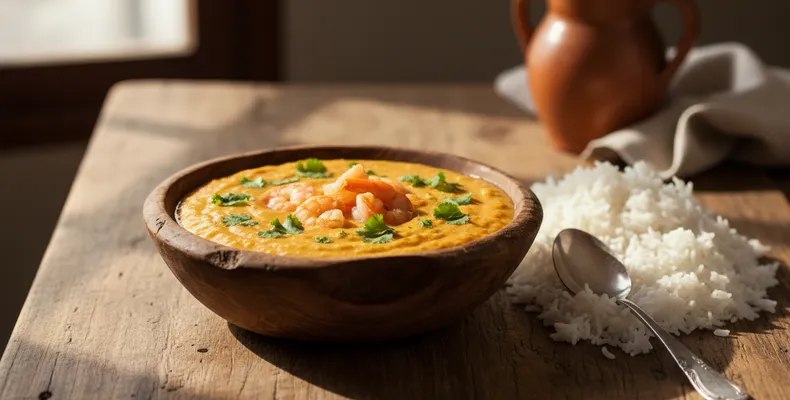
Few dishes capture the soul of Bahian cuisine as beautifully as vatapá. Creamy, fragrant and full of character, it brings together ingredients that tell the story of encounters between Africa, the indigenous peoples and the Portuguese colonizers. If you want to make a real vatapá — the kind that fills the house with aroma and gathers everyone around the table — you've come to the right place.
In this article, we'll walk through each step of the recipe together, with practical tips for nailing the texture, suggestions for substitutions and even how to store the leftovers. The idea is that even someone who has never made vatapá can achieve a result worthy of the finest tables in Bahia. So grab your wooden spoon, get the dendê oil ready, and let's begin.
Vatapá has deep roots in the African heritage brought to Brazil by enslaved peoples, especially in Bahia. Tied to candomblé (an Afro-Brazilian religion) and to popular festivals, it became a symbol of the rich Afro-Bahian cuisine, where dendê (palm) oil, coconut milk and seafood come together.
Recipe Details
- Dish: Traditional Bahian vatapá
- Origin: Bahia, Brazil
- Region/tradition: Brazilian, Afro-Bahian cuisine
- Category: Main course
- Difficulty: medium
- Preparation time: 1h30
- Yield: 6 servings
- Approximate nutritional information: about 350 to 450 calories per serving
Ingredients
- 500 g (about 1 lb) day-old bread (French-roll style) or 8 slices of sandwich bread
- 500 ml (about 2 cups) coconut milk
- 500 ml (about 2 cups) whole milk
- 400 g (about 14 oz) cleaned shrimp (part fresh and part dried, if you like)
- 150 g (about 1¼ cups) roasted cashews
- 100 g (about ¾ cup) roasted, skinless peanuts
- 4 tablespoons dendê (palm) oil
- 1 large onion
- 4 garlic cloves
- 2 ripe tomatoes
- 1 chopped bell pepper
- Grated ginger to taste
- Fresh cilantro to taste
- Fresh green onion to taste
- Salt and pepper to taste
- A little smoked dried shrimp to set aside (optional, to intensify the flavor)
If you prefer a milder version, use only fresh shrimp. The important thing is to have all your ingredients separated and chopped before you start, because the cooking flows much better that way.
Instructions
- Cut the bread into pieces and soak it in the whole milk for about 15 minutes, until very soft.
- Meanwhile, blend the cashews, peanuts and part of the shrimp (dried or fresh) with a little coconut milk to form a smooth paste.
- In a large pot, sauté the onion, garlic, ginger, tomato and bell pepper in the dendê oil until soft and fragrant.
- Add the softened bread along with its milk, the blended nut paste and the remaining coconut milk.
- Stir constantly over low heat so it doesn't form lumps or stick to the bottom.
- Keep stirring for about 20 to 30 minutes, until the cream thickens and takes on a smooth, velvety consistency.
- Adjust the salt and pepper.
- Add the reserved fresh shrimp and cook for a few more minutes, just until it turns pink.
- Finish with chopped cilantro and green onion. The vatapá is ready when it slides off the spoon in a glossy cream.
Tips and Variations
- Always stir with a wooden spoon over low heat: vatapá likes patience and burns easily if you're not careful.
- If it gets too thick, add a little more coconut milk or broth; if it's too runny, let it reduce for a few more minutes.
- Taste and adjust the dendê little by little, since it has a strong flavor and gives the dish its characteristic orange color. Don't overdo it at the start.
- To serve, vatapá pairs well with fluffy white rice, acarajé, abará (Afro-Bahian bean dishes) or even on its own, as a side for grilled fish.
- Many Bahians like to top the dish with whole shrimp and a drizzle of dendê for shine.
- If you can't find dendê oil, you can use regular oil, but the flavor and color won't be the same as the traditional version.
- For those who don't eat seafood, make a vegetarian version by replacing the shrimp with palm hearts or mushrooms and boosting the seasonings.
- Cashews can be swapped for almonds.
- The French bread can be replaced with sandwich bread without any problem.
- Store in the refrigerator for up to three days, in a sealed container.
- When reheating, do it over low heat and add a little coconut milk or water, stirring to bring back the creaminess.
- It can be frozen for up to two months, though the texture will be a little different after thawing.
It's a rich and nourishing dish, perfect for special meals and family celebrations. Making a vatapá at home is, in a way, taking part in this living history of flavors and traditions. How about bringing a little piece of Bahia to your table?