
Traditional Capixaba Moqueca: Clay Pot Recipe with Annatto
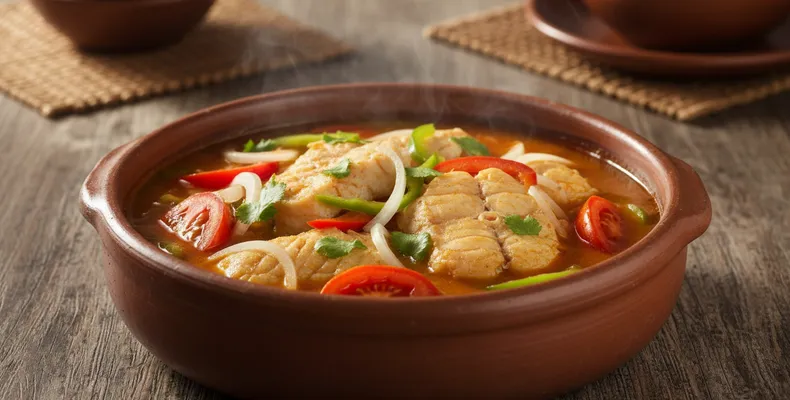
If you think every moqueca has to include palm oil (dendê) and coconut milk, get ready to discover a lighter, more delicate, and equally captivating version: the capixaba moqueca. Coming from Espírito Santo, it skips the palm oil and coconut milk, relying instead on the freshness of the ingredients, the vibrant color of annatto (urucum), and the unmistakable aroma of a clay pot.
The great star of capixaba moqueca is its simplicity. While the Bahian version uses palm oil and coconut milk, giving the dish a denser, more golden character, the capixaba version stands out for its lightness. Here the flavor comes from fresh fish, green seasonings, ripe tomatoes, and the reddish touch of annatto (urucum), also known in Brazil as colorau or urucum coloring. Another essential element is the clay pot, handcrafted by the paneleiras (potters) of Goiabeiras, in Vitória. This vessel is registered as Brazilian cultural heritage and makes all the difference: the clay holds heat evenly and concentrates the aromas, giving the moqueca that taste of food made with care and tradition.
In this article you'll understand what sets capixaba moqueca apart from the Bahian version, learn the complete recipe in a clay pot, and even discover tips, substitutions, and the history behind this dish that is a heritage of the state. Shall we cook together?
Recipe details
- Origin: Espírito Santo, Brazil
- Region/tradition: Brazilian (capixaba)
- Category: main dish
- Difficulty: medium
- Time: 1h
- Yield: 6 servings
- Each serving has about 320 to 380 calories, rich in protein, with healthy fats from olive oil and low in carbohydrates (not counting the side dishes)
Ingredients — fish and marinade
- 1 kg (about 2.2 lb) of firm fish in steaks or fillets (badejo, snook, dogfish, or namorado)
- Juice of 1 lime
- Salt to taste
- Freshly ground black pepper
Ingredients — moqueca
- 3 ripe tomatoes cut into slices
- 2 large onions cut into rings
- 1 red bell pepper sliced into rings
- 1 yellow bell pepper sliced into rings
- 6 cloves of garlic, crushed
- 1 bunch of cilantro, chopped
- 1 bunch of green onion, chopped
- 1 tablespoon of annatto (colorau)
- Half a cup of olive oil
- Salt to taste
- A few extra tomato slices for garnish (optional)
Directions
- Season the fish with the lime juice, salt, and black pepper.
- Let it marinate for about 20 to 30 minutes in the refrigerator while you prepare the other ingredients; this resting firms up the flesh and enhances the flavor.
- Dissolve the annatto in a little warm olive oil to release all the color.
- In the clay pot, start with a drizzle of the colored oil on the bottom.
- Spread part of the onion, garlic, tomato, and bell peppers to form a bed of vegetables.
- Arrange the fish steaks over the vegetables.
- Cover with the remaining onion, tomato, bell peppers, and the annatto oil.
- Finish with plenty of cilantro and green onion.
- Place over medium heat with the pot covered.
- Don't stir with a spoon, so the fish doesn't fall apart; if needed, just gently swirl the pot.
- Let it cook for about 25 to 30 minutes, or until the fish is cooked through and the vegetables are tender; the broth forms naturally from the water released by the tomato and onion.
- Taste and adjust the salt before serving.
Tips and variations
- Use very fresh, firm-fleshed fish so it doesn't fall apart during cooking.
- Avoid lifting the lid too often, as the steam is what keeps everything tender.
- If you don't have a clay pot, use a wide, thick-bottomed pan, although the characteristic aroma will be a bit different.
- For a seafood version, add shrimp, squid, or mussels in the last few minutes of cooking.
- The annatto can be replaced with common powdered colorau, found in any market.
- For a slightly spicy touch, add a chopped red chili pepper (pimenta-dedo-de-moça).
- Serve it traditionally with fluffy white rice and the famous pirão, made from the moqueca's own broth thickened with cassava flour.
- A good homemade hot sauce on the side rounds out the experience.
- The moqueca is even tastier the next day, once the seasonings have deepened.
- Store in the refrigerator in a closed container for up to 2 days and reheat over low heat, without letting it boil too much so the fish doesn't dry out.
- Freezing is not recommended, as it significantly changes the texture of the fish and vegetables.
Capixaba moqueca carries Indigenous, Portuguese, and African heritage. The word moqueca comes from Tupi and refers to the technique of cooking food wrapped and roasted. Over time, the capixabas incorporated the clay pot of the paneleiras of Goiabeiras, Indigenous annatto, and fresh seasonings, creating a dish with its own identity. Today it is a source of pride in Espírito Santo and wins over anyone who tries this light, flavor-packed combination. How about bringing this tradition into your kitchen this weekend?