
Traditional Gaucho Chimarrão: How to Prepare and Serve Yerba Mate in the Gourd
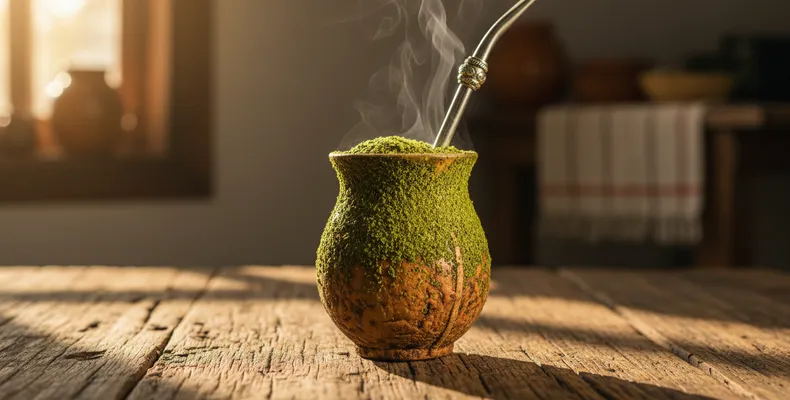
Chimarrão is much more than a drink in Rio Grande do Sul: it's a ritual, a gesture of welcome, and a tradition passed down from generation to generation. If you've always wanted to learn how to make a good bitter mate at home, know that the technique of serving it (called cevar) has its secrets, and that's exactly what we're going to teach here, from start to finish.
Preparing chimarrão seems simple, but anyone who has tried knows that the yerba can clog, the water can boil too much, and the bitter taste can become unbearable. With a little practice and the right tips, you'll be able to set up a perfect gourd, with that little green foam on top and a balanced flavor that lasts through several refills.
First of all, gather the traditional utensils. The cuia is the vessel where chimarrão is prepared, usually made of porongo (a type of gourd), although there are also versions made of wood, ceramic, or stainless steel. The bombilla is the metal straw with a filter at the tip, responsible for drawing up the water without pulling the yerba along with it. And, of course, you need yerba mate specifically for chimarrão, which is finer and greener than the one used for tereré. The water also deserves special attention: it should be heated, but never boiled, between 70°C and 80°C (160°F and 175°F), when the first little bubbles start to form at the bottom of the kettle. Boiling water burns the yerba, makes the mate excessively bitter, and greatly shortens the lifespan of the serving.
Recipe Overview
- Origin: Rio Grande do Sul, Brazil
- Region/tradition: Gaucho Cuisine
- Category: Hot beverage
- Difficulty: medium
- Preparation time: 10 minutes
- Yield: 1 gourd for several refills
Ingredients
- Yerba mate specifically for chimarrão, enough to fill about two-thirds of the gourd
- Hot water between 70°C and 80°C (160°F and 175°F), roughly 1 liter for a good round
- Sugar, ginger, mint, or orange peel, optional for those who like to vary the flavor
Preparation
- If the gourd is new, especially one made of porongo, cure it: fill it with damp yerba mate and warm water and let it rest for a day, repeating the process for two or three days to remove impurities. Already-cured gourds don't need this step.
- Fill the gourd with yerba until about two-thirds of its capacity.
- Cover the opening with your hand, turn the gourd upside down, and shake gently so the finest powder rises to the top.
- Tilt the gourd back at roughly a 45-degree angle, forming a wall of yerba on one side and an empty space on the other.
- Into the empty space, pour a little warm water, not hot, to moisten the yerba without burning it.
- Wait a few moments for the yerba to absorb the moisture.
- Insert the bombilla on that same side, with your finger covering the top end to prevent yerba from getting into the filter.
- Push the bombilla down to the bottom, keeping the yerba tilted in position.
- Always add the hot water in the same spot where the bombilla is, in small amounts and slowly.
- Never move the bombilla once it's positioned, as this clogs the filter.
- With each refill, only fill the hole created by the water, keeping the dry side of the yerba intact so it lasts through more rounds.
Tips and Variations
- The first sip is usually the most bitter, and by tradition it's taken by whoever is serving.
- If the mate is too strong, add mint, orange peel, or a little warmer water.
- Those who prefer sweetened versions can add sugar, the so-called mate doce (sweet mate), although purists prefer it bitter.
- Cold mate with juice becomes the famous tereré, typical of hot weather.
- Yerba mate for chimarrão has no direct substitute, since the grind and leaf content are specific. Don't use tereré yerba, which is coarser and made for cold water.
- Store the yerba mate in a tightly sealed package, in a dry place away from light, to preserve its green color and freshness.
- Empty and dry the gourd upside down after use, to avoid mold and bad odors.
- Chimarrão is practically calorie-free when drunk bitter, since only water passes through the yerba mate. It's rich in antioxidants and contains natural caffeine, which helps provide energy, along with substances associated with stimulating metabolism.
- Because it contains caffeine, consume it in moderation at night and be cautious if you're sensitive to stimulants.
The tradition of mate comes from the Guarani indigenous peoples, who consumed the yerba long before the arrival of the colonizers. Over time, the habit spread throughout southern Brazil, Argentina, Uruguay, and Paraguay, becoming a symbol of cultural identity. In Rio Grande do Sul, the chimarrão circle represents friendship, conversation, and hospitality: the same gourd passes from hand to hand, without changing the bombilla, in a gesture that unites families and friends. Preparing a good chimarrão at home is, above all, a way to celebrate this history.