
Traditional Paraná Barreado: The Art of Meat Slow-Cooked in a Clay Pot
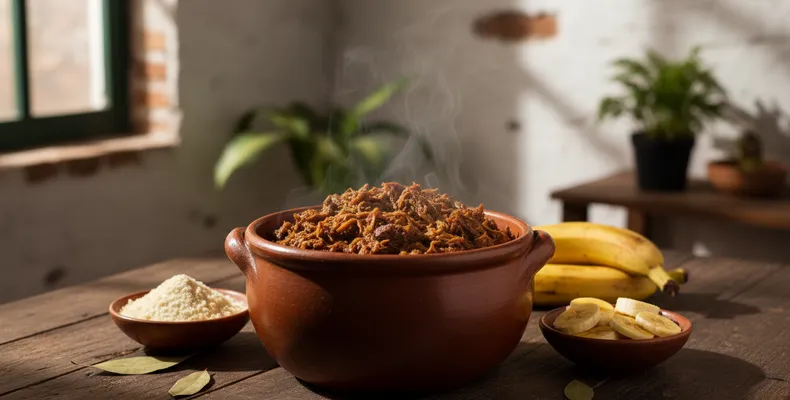
Few dishes capture the soul of Paraná cuisine as well as barreado. Born on the state's coast, every forkful carries the patience of hours of slow cooking, the aroma of shredded meat, and the earthy touch of the clay pot. It's food for celebrations, family gatherings, and a tradition passed down through generations.
If you've heard of this classic and want to make it at home, this guide is for you. Together we'll walk through the entire recipe, the secrets of the cooking process, tips for getting it just right, and a bit of the fascinating history that made barreado a symbol of Paraná.
Recipe Card
- Origin: Coast of Paraná, Brazil
- Region/tradition: Brazilian (from Paraná)
- Category: Main dish
- Difficulty: medium
- Time: approximately 8 hours
- Yield: 8 servings
- Per serving: estimated between 400 and 550 calories, depending on the amount of fat and side dishes
Ingredients — meat
- About 2 kg (4.4 lb) of tougher cuts of beef (chuck, brisket, or shank), cut into large cubes
- 200 grams (7 oz) of bacon or pork belly, chopped
- 4 large onions, sliced
- 6 garlic cloves, crushed
- 3 bay leaves
- 1 tablespoon of cumin
- Salt to taste
- Black pepper to taste
- Hot water as needed during cooking
Ingredients — for serving
- Fine cassava flour (farinha de mandioca)
- Ripe bananas
- White rice (optional)
Instructions
- Season the meat cubes with salt, pepper, cumin, garlic, and bay leaves
- Let them rest for at least 30 minutes so the flavors soak in well
- In a clay pot, if you have one, layer the meat, sliced onion, and chopped bacon, alternating them
- Cover the pot and seal the edges of the lid tightly with a paste made of cassava flour and water — the famous barrear (sealing) technique
- Place over very low heat, or in a moderate oven, and let it cook for 6 to 8 hours, taking your time
- Carefully open the pot when the meat is so tender it falls apart on its own
- Stir well so the shredded meat blends into the rich, fatty broth
- Adjust the salt if needed, until you reach an almost paste-like consistency, dark and fragrant
- To serve, place a good portion of cassava flour at the bottom of the plate and pour the piping-hot barreado over it
- Mix in gradually, adding more flour until it reaches your preferred consistency, and top with banana slices
Tips and variations
- Patience is the most important ingredient: high heat will dry out and toughen the meat, so resist the temptation to rush it
- If you don't have a clay pot, use a heavy cast iron pot with a tight-fitting lid, but keep in mind that clay gives it a flavor and texture that are hard to replicate
- The combination of cassava flour and banana may seem unusual, but that's exactly what makes barreado so special
- You can swap the chuck for other slow-cooking cuts, such as shoulder or eye of round, always favoring meats with a little fat and connective tissue
- The bacon can be replaced with smoked calabresa sausage for a different flavor variation
- Those who don't eat beef can try versions with pork, though they stray from the traditional recipe
- Barreado is even better the next day, once the flavors have fully settled
- Store it in the refrigerator in a sealed container for up to 4 days and reheat over low heat, adding a little water if it's too dry
- It also freezes well for up to 3 months, keeping most of its characteristics
The origin of barreado dates back to the colonial period on the Paraná coast, especially in towns like Morretes, Antonina, and Paranaguá. Tradition holds that the dish was prepared during Carnival, slow-cooked for hours so it would be ready without needing supervision, leaving the family free for the festivities. The pot sealed with flour allowed for this long, safe cooking, and thus was born one of Paraná's most beloved and representative dishes, still celebrated today at food festivals.