
Traditional Pato no Tucupi from Pará: An Amazonian Recipe with Jambu and Tucupi
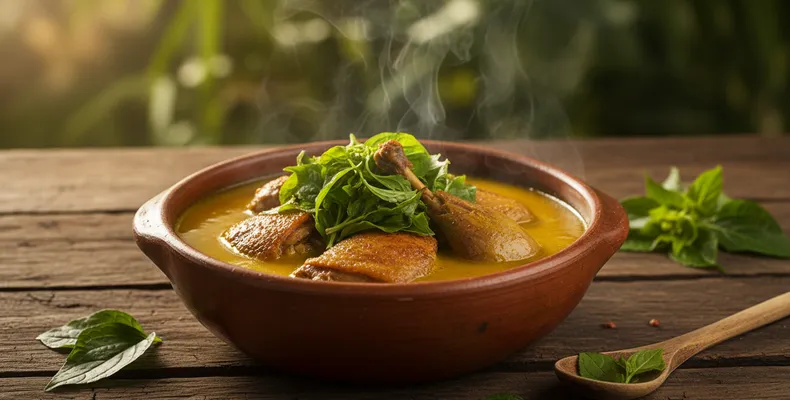
Few dishes capture the soul of the Amazon quite like pato no tucupi (duck in tucupi sauce). Born in the heart of Pará, this delicacy brings together three elements that define the cuisine of the region: free-range duck, the golden tucupi extracted from bitter cassava, and jambu, that leaf that creates a gentle tingling sensation in your mouth. Together, they create a culinary experience that surprises anyone tasting it for the first time and wins their heart forever.
Tucupi is a yellow broth obtained from the liquid of grated cassava. Raw, it is toxic because it contains cyanogenic compounds, but after hours of cooking it transforms into a safe, tangy, and deeply flavorful sauce. Jambu, on the other hand, is a vegetable native to the region that contains a substance called spilanthol, responsible for the numbing and tingling sensation on the lips and tongue. This combination of flavor and texture is what makes the dish a true signature of Amazonian cooking.
Traditionally, pato no tucupi is served on festive occasions, especially during the Círio de Nazaré, one of Brazil's largest religious celebrations, held in Belém. During this time, families from Pará gather around the table to share this dish, which carries generations of history and affection. If you've always wanted to bring a taste of this rich northern region into your kitchen, this complete guide will walk you through it from start to finish.
Recipe overview
- Origin: Belém, Pará
- Region/tradition: Amazonian (Northern Brazil)
- Category: Main course
- Difficulty: high
- Time: 4 hours (plus marinating time)
- Marinating time: at least 3 hours, or overnight
- Yield: 8 servings
Ingredients — Duck and marinade
- 1 cleaned free-range duck (about 2.5 kg / 5.5 lbs)
- Juice of 3 limes
- 4 cloves garlic, crushed
- 1 large onion, chopped
- Salt to taste
- Black pepper to taste
- A handful of fresh herbs (parsley and green onion)
- Bay leaves
- A little vinegar for the initial cleaning of the bird
Ingredients — Tucupi broth
- 2 liters (about 8.5 cups) of tucupi (found frozen or at markets in the Northern region)
- 4 cloves garlic
- 1 onion
- Aromatic pepper (pimenta-de-cheiro) to taste
- Chicória-do-pará leaves (a regional herb, if you can find it)
- Salt to taste
- Alfavaca (Brazilian basil)
Ingredients — To finish and serve
- 4 large bunches of jambu, already cleaned
- White rice as a side
- Tapioca pearls cooked in the tucupi itself, if you want to follow tradition
Instructions
- Clean the duck well, rubbing it with lime and vinegar to remove any odors.
- Season the bird with garlic, onion, salt, black pepper, fresh herbs, and lime juice.
- Let it marinate in the refrigerator for at least 3 hours, or overnight, which is ideal for the flavor to penetrate the meat.
- Roast the seasoned duck in a medium oven, about 180°C (350°F), until golden and thoroughly cooked, which takes around 1 hour and 30 minutes, basting occasionally with the pan juices to keep the meat juicy.
- Meanwhile, bring the tucupi to a boil in a large pot along with garlic, onion, aromatic pepper, Brazilian basil, chicória, and salt.
- Let it boil and cook for at least 40 minutes to 1 hour, making sure the broth loses any toxicity and develops body.
- Boil the jambu leaves in salted water for a few minutes, just until they wilt, then drain well.
- Once the duck is roasted, cut it into pieces and submerge the portions in the boiling tucupi for a few more minutes so the meat absorbs the flavor of the broth.
- When serving, add the blanched jambu on top and finish with a drizzle of piping-hot tucupi.
Tips and variations
- Never rush the tucupi: the longer it cooks, the safer and more flavorful it becomes.
- If you want a thicker broth, let it reduce until slightly thickened.
- Adjust the pepper carefully, since aromatic pepper (pimenta-de-cheiro) adds fragrance without much heat, ideal for those who don't like very spicy food.
- If you can't find free-range duck, use regular duck or even free-range chicken, adjusting the cooking time.
- Tucupi is irreplaceable for maintaining authenticity, but today you can find it frozen in regional product shops and online markets.
- If jambu isn't available, keep in mind that nothing exactly replicates its tingle, but watercress or spinach can serve as an alternative purely for appearance and texture.
- To store, keep the duck and tucupi separate in sealed containers in the refrigerator for up to 3 days, or freeze the broth for up to 3 months.
- Jambu is best prepared fresh.
Each serving of pato no tucupi has approximately 380 to 450 calories, making it a good source of protein from the duck and of bioactive compounds present in the jambu. Tucupi, being derived from cassava, contributes carbohydrates and a natural tangy flavor. Keep in mind that these values vary depending on the sides and the cut of the bird you choose.
The history of pato no tucupi blends indigenous heritage with influences that accumulated over the centuries. The use of tucupi and jambu dates back to the native peoples of the Amazon, who had mastered cassava processing long before the arrival of the colonizers. Over time, the dish adopted duck as its main protein and established itself as one of the greatest symbols of Pará's identity. Preparing this recipe at home is, more than just cooking, a way to honor the cultural richness and the generosity of the forest that sustains this unmistakable flavor.