
Traditional Tacacá from Pará: Tucupi, Jambu and Dried Shrimp Recipe
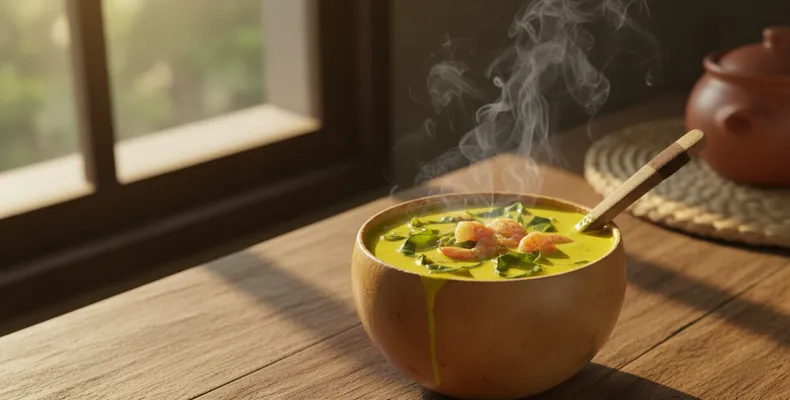
If you've ever wandered the streets of Belém at dusk, you know that tacacá is far more than a dish: it's a ritual. Served piping hot in a gourd bowl, it brings together intense flavors and a unique texture that combines the tang of tucupi, the characteristic tingle of jambu, and the delicacy of dried shrimp. In this article, we'll guide you step by step through this traditional recipe so you can bring a little piece of the Amazon into your own kitchen.
Tacacá is one of those dishes that sparks curiosity in those who've never tried it and passion in those who have. The good news is that, with the right ingredients and a little patience, you can prepare a version at home that's remarkably faithful to the original. Shall we go through each step together?
The dish originates in Belém, in the state of Pará, and is part of Brazilian Amazonian cuisine. It's served as a soup or broth, working both as a main course and as a snack.
Recipe overview
- Origin: Belém, state of Pará
- Region/tradition: Brazilian Amazonian cuisine
- Category: soup or broth served as a main course or snack
- Difficulty: medium
- Time: about 1h30 (not counting the prior preparation of the tucupi, if made from scratch)
- Yield: approximately 6 servings
Ingredients — Tucupi broth
- 2 liters of tucupi (the yellow liquid extracted from bitter cassava, already boiled and seasoned)
- 4 cloves of garlic, crushed
- 4 leaves of chicória (a leafy herb; you can use cilantro if you prefer)
- 2 pimentas-de-cheiro (aromatic Brazilian chili peppers)
- Salt to taste
- 1 small piece of ginger
It's important that the tucupi is boiled for a good while, since it contains natural hydrocyanic acid that needs to evaporate.
Ingredients — To complete the dish
- 2 bunches of jambu (the leaf that causes the famous tingling sensation on the tongue)
- 300 grams of salted dried shrimp (preferably whole and with shell)
- About 200 grams of tapioca starch dissolved in water until it forms a translucent porridge
- 1 traditional serving gourd bowl (optional, but it adds charm and keeps the dish warm)
Instructions
- Place the tucupi in a large pot over the heat along with the garlic, chicória, ginger, chili peppers, and salt.
- Let it boil over medium heat for at least 20 to 30 minutes, stirring occasionally, until the tucupi develops a strong aroma and becomes slightly spicy.
- Wash the bunches of jambu well and remove the thicker stems.
- Cook the jambu leaves in boiling water with a pinch of salt for about 5 minutes, just until they wilt, without overcooking so they don't lose their texture.
- Drain the jambu and set aside.
- Soak the dried shrimp in warm water for about 20 minutes to remove excess salt (or briefly blanch them in boiling water).
- Dissolve the tapioca starch in cold water and cook over low heat, stirring constantly, until it turns into a clear, glossy cream with the consistency of a light porridge, being careful not to let it form lumps.
- In the gourd bowl or a deep dish, first add a portion of the still-hot tapioca starch.
- Pour the very hot tucupi over it.
- Top with a generous portion of jambu and finish with the dried shrimp.
- Serve immediately, sipping directly from the gourd bowl, without cutlery, as tradition in Pará dictates.
Tips and variations
- Adjust the chili to your taste: authentic tacacá tends to be spicy, but you can serve the pimenta-de-cheiro on the side for those who prefer it milder.
- If you can't find fresh jambu, look for it at markets that sell Amazonian products or frozen versions in specialty stores.
- Bottled industrial tucupi is a great practical alternative, but remember to boil it anyway.
- The dried shrimp can be swapped for small fresh pink shrimp, although the flavor will change quite a bit.
- Chicória can be replaced with regular cilantro.
- The tapioca starch can be replaced with dissolved polvilho azedo (fermented cassava starch), though the texture will be slightly different.
- It's best to eat tacacá right away; if there are leftovers, store the components separately in the fridge for up to 2 days and reassemble, reheating well before serving.
- Approximately, one serving contains about 180 to 220 calories, with a good amount of protein from the shrimp, carbohydrates from the tapioca starch, and little fat.
- The sodium content can be high due to the dried shrimp and the seasoned tucupi, so it's worth watching the salt if you have dietary restrictions.
Tacacá has deep roots in Amazonian Indigenous culture. Its name comes from an ancestral broth prepared by the region's original peoples, who already mastered the process of extracting and detoxifying tucupi from bitter cassava. Over time, the dish incorporated ingredients like shrimp and became a symbol of Pará's identity. Today, it's sold at tacacazeira stalls throughout Belém and is part of Brazil's culinary heritage. Preparing this recipe at home is a heartfelt way to honor such a rich tradition.