
Traditional Minas-Style Vaca Atolada: Beef Ribs with Cassava Recipe
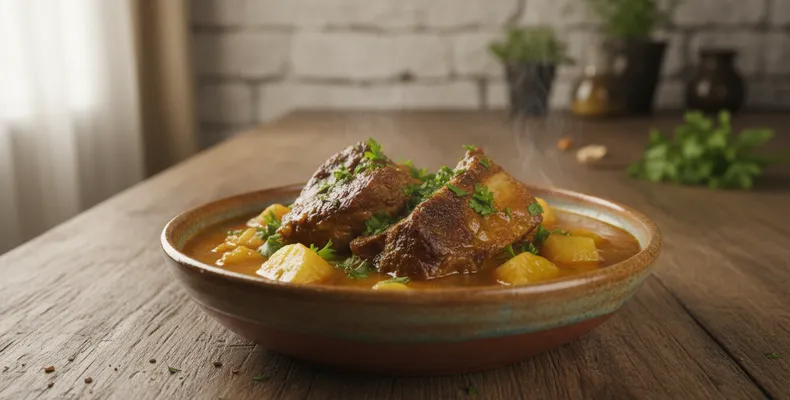
Few dishes capture the soul of Minas Gerais cooking quite like vaca atolada. It's slow-simmered comfort food, made with care, the kind of meal that brings the whole family around the table on a lazy Sunday. The combination of juicy beef ribs and tender cassava, which practically melts into the broth, is the sort that warms the heart and fills the house with a wonderful aroma.
The curious name comes from a lovely image: the beef ribs sit sunken, or "atolada" (stuck in the mud), amid the soft, cooked cassava. The cassava partly breaks down during cooking, creating a thick, creamy broth that wraps around the meat, as if the cow were caught in a mud pit. It's one of those folk names that reflect so much of the creativity and good humor of the people of Minas Gerais.
This is a country dish through and through, born in the farms and rural kitchens of the interior, where ribs and cassava were plentiful and affordable ingredients. Over time, it became a symbol of Minas cuisine and won over tables all across Brazil, especially at family lunches and countryside celebrations. In this article, you'll find the complete, traditional recipe with detailed step-by-step instructions, plus valuable tips, substitutions, storage methods, and a bit of the history behind this beloved dish.
Recipe Overview
- Origin: Minas Gerais, Brazil
- Region/tradition: Minas cuisine
- Category: main course
- Prep and cook time: 2h30
- Meat resting time: about 30 minutes
- Yield: 8 servings
- Difficulty: medium
Ingredients — the ribs
- 1.5 kg (about 3.3 lb) beef ribs cut into pieces
- 3 cloves garlic, crushed
- 1 large onion, chopped
- 2 ripe tomatoes, chopped
- 2 bay leaves
- Salt to taste
- Black pepper to taste
- 3 tablespoons oil
- Chopped parsley and scallions (cheiro-verde)
- Enough hot water to cover the meat
Ingredients — to complete
- 1 kg (about 2.2 lb) cassava, peeled and cut into medium pieces
- A little colorau (annatto/urucum) to color the broth (optional)
- 1 dedo-de-moça chili pepper, for those who enjoy a spicy touch (optional)
- A generous amount of parsley and scallions to finish
Instructions
- Season the ribs with the garlic, salt, and pepper, and let them rest for about 30 minutes to absorb the flavor.
- In a large, heavy-bottomed pot, heat the oil and brown the rib pieces well on all sides.
- Add the onion and sauté until softened.
- Stir in the tomatoes and bay leaves, mixing until a sauce forms.
- Cover the ribs with hot water, put the lid on, and let them simmer over low heat for about 1 hour and 30 minutes, or until the meat is very tender (in a pressure cooker, about 40 minutes after it comes to pressure).
- Keep checking and adding hot water whenever needed.
- Once the ribs are tender, add the cut cassava and cook for another 20 to 30 minutes, until it's very soft.
- Let part of the cassava break down naturally to thicken the broth.
- Adjust the salt, turn off the heat, and finish with plenty of chopped parsley and scallions.
Tips and Variations
- For an even richer broth, mash a few pieces of the already-cooked cassava against the side of the pot and stir them into the rest.
- Choose ribs with plenty of bone and a bit of fat, as this is what gives flavor and tenderness.
- Always cook over low heat and without rushing: vaca atolada rewards patience.
- If you can't find fresh cassava, frozen works well and comes already peeled, saving you effort.
- The ribs can be swapped for pieces of shin (músculo) or chuck (acém), though the result will be a little different from the traditional version.
- For a lighter version, trim the excess fat from the meat before browning.
- The dish keeps for 3 to 4 days in the refrigerator in a sealed container.
- It can be frozen for up to 3 months; when reheating, add a little water, as the cassava tends to soak up the broth.
- Serve with white rice, sautéed collard greens, and a little chili on the side.
Per serving, vaca atolada averages 450 to 550 calories, making it a meal rich in protein from the ribs and carbohydrates from the cassava. The fat content varies depending on the cut of meat used. Since it's a complete, hearty dish, it usually doesn't need many side dishes. Keep in mind that these figures are estimates and may change according to the ingredients you choose.
Vaca atolada is more than a recipe: it's a piece of Minas tradition passed down from generation to generation. Made with simple ingredients and a lot of affection, it turns an ordinary lunch into a special moment. Now that you know all the secrets, all that's left is to roll up your sleeves and enjoy this Minas Gerais classic in your own home.